 how-to
7 Steps to Light a Small Patio for Evening Use
Last Updated: November 4, 2026
Quick Summary
To light a small patio for evening use, map three layers first: ambient, task, and accent. Good small patio lighting uses warm white bulbs in the 2700K to 3000K range, lights the edges rather than the center, and starts with less output. Keep fixtures weatherproof and always add task light on steps and walkways.
- Map ambient, task, and accent layers before buying any fixtures.
- Choose warm white bulbs between 2700K and 3000K for a cozy feel.
- Light the edges, not the center, and keep the seating area soft.
- Use an IP65 rating for most exposed patio fixture locations.
- Start with fewer lights and add only where the space feels dark.
Table of Contents
- Step 1: Map Your Small Patio Lighting Zones Before You Buy Anything
- Step 2: Pick Small Patio Lighting Ideas That Fit Tight Spaces
- Step 3: Match Color Temperature and Lumens to a Cozy Atmosphere
- Step 4: Follow Outdoor Lighting Best Practices for Weather and Safety
- Step 5: Plan Your Low Voltage Landscape Lighting Installation
- Step 6: Add Smart Controls and Energy-Saving Habits
- Step 7: Avoid the Mistakes That Ruin Small Patio Lighting
- Request a Free Quote from Santini's Landscape
- Frequently Asked Questions
Step 1: Map Your Small Patio Lighting Zones Before You Buy Anything
Learning how to light a small patio for evening use starts with a plan, not a shopping cart. Most homeowners buy a string of lights and hope for the best. That approach usually leaves dark corners and a space that feels unfinished.
Here is the fix: map three lighting layers before you spend a dollar.
The Three Layers: Ambient, Task, and Accent
Small patio lighting works when each layer has a job.
- Ambient lighting is the base glow. String lights, overhead fixtures, or a wall light fill the space.
- Task lighting helps people see. It covers steps, grills, and serving areas.
- Accent lighting adds depth. Uplighting on a tree or a lantern in a corner does this well.
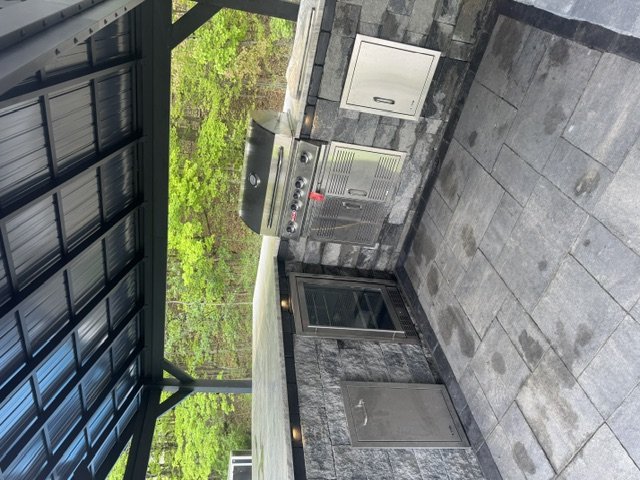
A tight patio needs all three. Skip one and the space feels flat. A good patio layout depends on where people sit, walk, and cook, so a site walkthrough before any quote is the place to start.
Step 2: Pick Small Patio Lighting Ideas That Fit Tight Spaces
The best small patio lighting ideas use vertical space and portable pieces. A small footprint does not mean a boring patio. It means every fixture has to earn its spot.
String Lights, Lanterns, and Portable Lamps
String lights are the workhorse of small patios. Run them zigzag overhead between a house wall and a post. Use warm white bulbs and keep the run tight so it does not sag.
Lanterns and portable lamps give you flexibility. Move them to the table for dinner, then to the corner for conversation. Battery models mean no wiring and no outlet hunt.
Solar-Powered and Rechargeable Options
Solar path lights and rechargeable table lamps suit renters and quick upgrades. Place solar panels where they get direct sun all day. Rechargeable lamps last through an evening and come inside to charge.
For layout inspiration on tight spaces, see our small patio design ideas for homeowners.
Step 3: Match Color Temperature and Lumens to a Cozy Atmosphere
Color temperature is the warmth or coolness of a bulb, measured in kelvin. For a cozy atmosphere, choose warm white bulbs in the 2700K to 3000K range. Cool white light above 4000K reads harsh and clinical on a patio, and on a small patio that harshness bounces off nearby walls and makes the space feel smaller than it is.
Lumens measure brightness. A small patio rarely needs high output. Too many lumens wash out the space and kill the mood, so start with less output and add light only where the space still feels dark.
A simple rule: light the edges, not the center. Keep the seating area soft and let the perimeter carry the glow. Dimmable bulbs give you room to adjust from dinner to late conversation.
Why Layering Beats One Bright Source
A single bright fixture creates glare and hard shadows. Three soft layers do the opposite: ambient light fills the volume, task light puts brightness where hands and feet go, and accent light adds depth so the eye has somewhere to rest. On a tight patio, the ratio matters more than the total. The right balance of ambient, task, and accent light depends on how much hardscape and planting the space contains.
Dimming and Control Behavior
Dimmable LEDs are not all equal. Some dim to a warm, candle-like low end; others shift color or flicker below 10 percent. When you specify fixtures, confirm the dimming range and pair them with a compatible dimmer or smart plug rated for LED loads.
Watch out: mixing 2700K and 4000K fixtures in one sightline is the fastest way to make a carefully planned patio look pieced together.
Here are the color temperature and brightness targets the article recommends for a cozy small patio.
| Spec | Value | Note |
|---|---|---|
| Cozy color temperature | 2700K to 3000K | Warm white bulbs |
| Harsh, clinical range | Above 4000K | Cool white reads harsh on a patio |
| Brightness | Start with less output | Add light only where space feels dark |
| Placement rule | Light the edges, not the center | Keep seating area soft |
| Dimming caution | Below 10 percent | Some LEDs flicker or shift color |
| Mixing caution | 2700K and 4000K | Avoid in one sightline |
Step 4: Follow Outdoor Lighting Best Practices for Weather and Safety
Outdoor lighting best practices come down to two things: keep water out and keep people safe. Fixtures that fail these tests cost you twice, once at purchase and again at replacement.
IP Ratings and Weatherproofing
The IP rating is a two-digit code that states how well a fixture resists dust and water. The first digit covers solids, the second covers moisture. For patio fixtures, an IP65 rating means dust-tight and protected against water jets, which suits most exposed patio locations. Fixtures set low in planting beds or near drainage paths where standing water can occur need stronger protection, so choose ratings with that exposure in mind.
Connections matter as much as the fixture. Use gel-filled or heat-shrink connectors rated for wet locations, keep transformers and plugs above grade and under cover, and seal every connection. Water finds the weakest point, usually where a wire nut sits exposed.
Lighting for Specific Patio Materials
Patio surface matters more than most guides admit, and it should drive fixture choice before aesthetics.
- Pavers: light colors bounce light well, so use fewer fixtures and lower lumens to avoid a washed-out look.
- Dark stone: absorbs light, so plan for slightly stronger accent fixtures and aim them across the surface rather than straight down.
- Wood decks: keep heat-producing bulbs away from the surface, and use low-voltage LED fixtures that stay cool to the touch.
- Concrete: shows glare, so aim fixtures away from eye level and choose shielded or louvered fixtures to cut hot spots.
Safety and Visibility
Task lighting on steps and walkways is not optional. Light the tread and the landing, not just the path, and keep fixture heights consistent so shadows do not create false edges. Keep cords and low-voltage runs out of walk lines, and confirm every outdoor receptacle is GFCI-protected.
Watch out: a beautiful ambient layer with no task light on the steps can turn a nice evening into a fall.
Dreams Set in Stone. You Need Santini's.
Step 5: Plan Your Low Voltage Landscape Lighting Installation
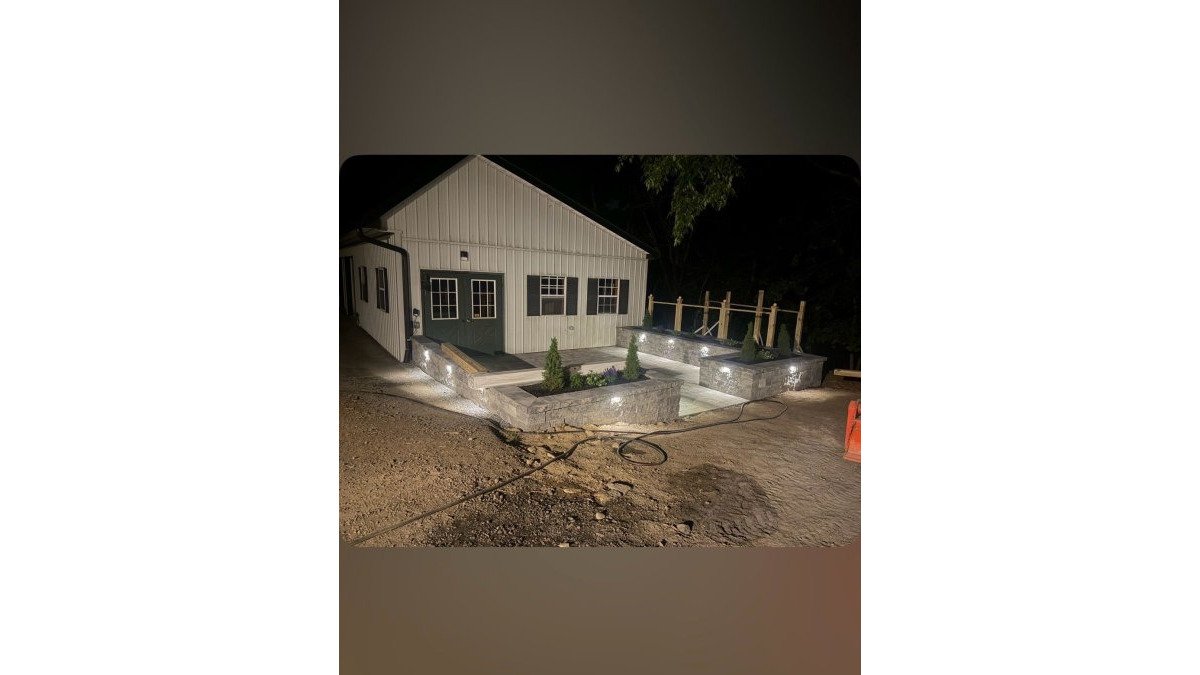
Low voltage landscape lighting installation is a job worth planning on paper first. Low voltage systems run on a transformer that steps power down, which makes them well suited to outdoor use and later expansion.
Sketch the run before you dig. Mark each fixture, the transformer location, and the path between them. Keep runs short to limit voltage drop, the gradual loss of power along a long wire. Group fixtures into zones so one bad connection does not darken the whole patio.
If you would rather hand the work to a crew, review the professional hardscaping services available for your project.
Step 6: Add Smart Controls and Energy-Saving Habits
Smart controls turn a good patio into an easy one. A plug-in timer or smart plug handles dusk-to-dawn schedules without you thinking about it. Motion sensors add light where people walk and save power everywhere else.
LED technology keeps energy use low. Pair LEDs with a timer and you cut waste without touching the ambiance. Smart home integration can let you dim the patio from your phone when guests arrive and the mood shifts.
Step 7: Avoid the Mistakes That Ruin Small Patio Lighting
The biggest mistake is overlighting. A small patio with too many bright fixtures feels like a parking lot, not a retreat. Start with fewer lights and add only where the space feels dark.
Other common missteps:
- Mixing color temperatures in one view
- Running one long circuit that dims at the far end
- Skipping weatherproof connections
- Forgetting steps and walkways
Watch out: skipping task lighting on steps is the mistake that turns a nice evening into a fall.
If you are adding a fire pit for ambiance, check the fire pit on patio cost breakdown before you commit. And if your project is small, our guide to hiring landscapers for small projects explains how to vet a crew.
Request a Free Quote from Santini's Landscape
Lighting a small patio is a design problem, not a shopping problem. Get the layers, color temperature, and installation right and the space works every evening.
Santini's Landscape has been in business since 2004. We focus on one project at a time, use premium materials, and bring experienced crews and specialized equipment to site work and prep. Dreams Set in Stone. You Need Santini's.
Ready to plan your patio lighting? Contact us to request a free quote and tell us what you picture for your space.
Frequently Asked Questions
What is the 5'7" lighting rule for patios?
The 5'7" rule is a guideline for hanging string lights or overhead fixtures so the lowest point sits about 5 feet 7 inches above the patio floor. That height keeps lights out of most people's line of sight while leaving enough clearance to walk under them. On a small patio, measure from the surface to the lowest bulb and adjust your anchors before drilling. If your space has a low ceiling or pergola, use shorter posts or wall mounts to maintain comfortable clearance.
How can I light a small patio without outdoor electrical outlets?
You have several practical options when outlets are not available. Solar-powered stake lights and string lights charge during the day and turn on at dusk. Rechargeable LED lanterns and table lamps can be carried out for the evening and brought back inside to charge. Battery-operated puck lights and fairy lights work well for accent layers. For a permanent solution, a low voltage landscape lighting installation uses a transformer that can be plugged into an indoor outlet and run outside through a small conduit.
What color temperature works best for a cozy patio atmosphere?
Warm white light in the 2700K to 3000K range creates the relaxed, cozy atmosphere most homeowners want on a patio. Cool white bulbs at 4000K and above feel brighter and more clinical, which suits task areas like grills or prep counters but can feel harsh for conversation seating. If you are layering, keep ambient and accent lights warm and reserve any cooler light for a small task zone. Dimmable bulbs let you lower brightness without shifting the color.
What should I check before installing low voltage landscape lighting?
Confirm the total wattage of your fixtures and choose a transformer with at least 20 percent headroom above that load. Plan for voltage drop on longer runs by using thicker cable or splitting the run into shorter branches. Check that every fixture is rated for outdoor use with an appropriate IP rating, and keep connections above grade or in waterproof housings. If you are not comfortable working with outdoor wiring, have a qualified installer handle the transformer and connections.
A well-lit patio should feel like an extension of your home, not a afterthought. If you want yours planned and installed right the first time, Santini's Landscape can help. We focus on one project at a time, use premium materials, and handle site prep with our own equipment. Get started with Santini's Landscape and turn your small patio into the best room outside your house.