 blog
blog
Small Patio Design Ideas for Homeowners: 7 Smart Layouts
Table of Contents
- Small Patio Design Ideas That Make a Compact Space Feel Intentional
- How to Choose Materials and Layout for a Small Patio
- Patio Paver Installation Cost: What Drives the Number
- Patio Drainage Solutions That Prevent Settling and Standing Water
- Small Patio Furniture Layout: Making Every Square Foot Work
- Permits, Site Prep, and What Happens When the Ground Fights Back
- Conclusion: Turning a Small Patio Into a Space You Actually Use
- Frequently Asked Questions
Last Updated: September 13, 2026
Small Patio Design Ideas That Make a Compact Space Feel Intentional
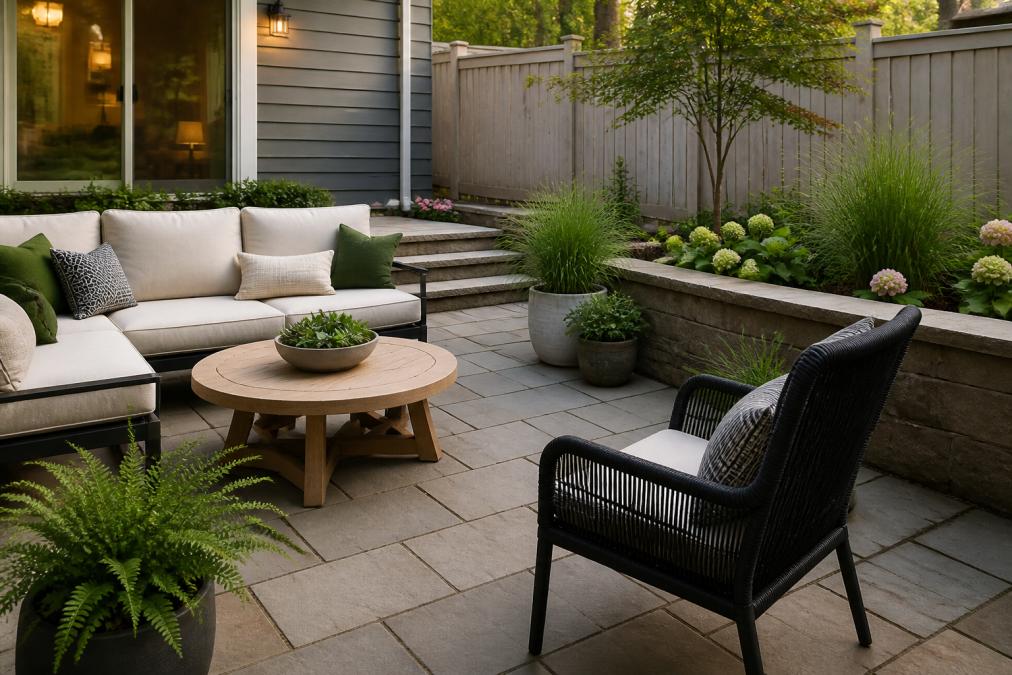
A small patio design succeeds when every element earns its place. When square footage is limited, the difference between a cramped concrete slab and a space you actually use comes down to three things: a clear layout, materials that match the home's architecture, and drainage planned before the first paver goes down. This guide from Santini's Landscape covers seven small patio design ideas for homeowners, from material selection to furniture placement, so a compact yard can work as hard as a large one.
The core principle behind good small patio design is restraint. Fewer materials, fewer furniture pieces, and one clear focal point will always outperform a busy layout crammed into a tight footprint.
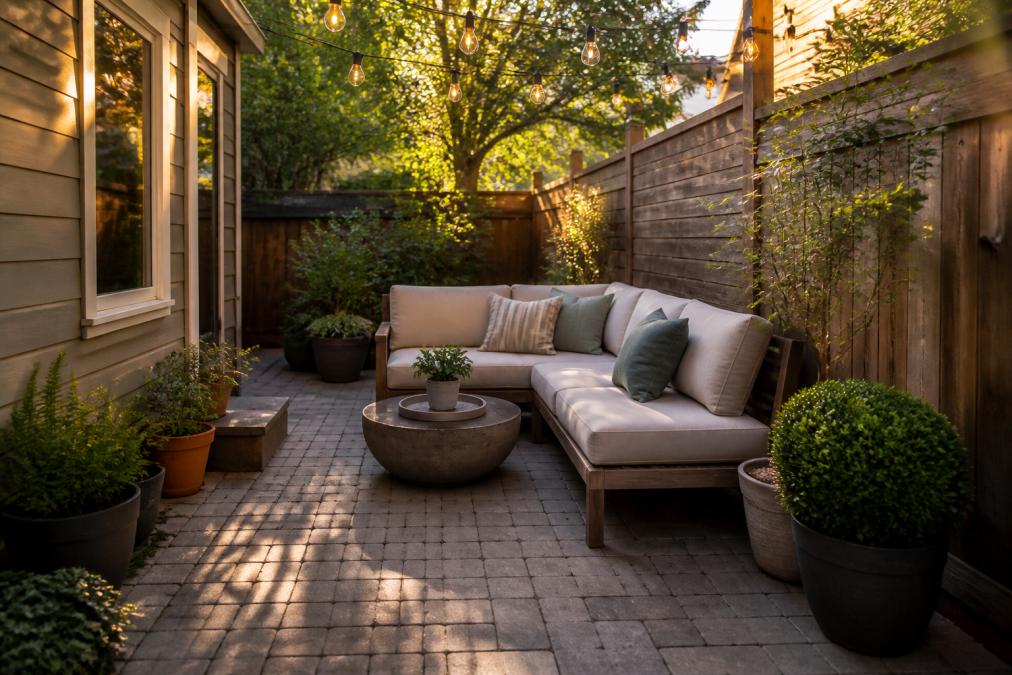
The seven layouts below range from a simple dining nook to a layered multi-zone retreat. Each one assumes a footprint under roughly 200 square feet, the size most homeowners are working with when they ask about small patio design.
How to Choose Materials and Layout for a Small Patio
Material choice is the first decision because it locks in the layout. A single paver type in one size creates visual calm in a tight space, while mixing three or four materials makes a small patio feel cluttered. For most homeowners, one primary material plus one accent is the right ratio.
Layout follows the same logic. Rectangular patios align with the house and read as an extension of the interior. Curved or irregular edges soften a small yard but waste usable area at the corners. If you plan to eat outside, orient the table toward the best view and keep circulation paths at least 36 inches wide.
- Concrete pavers: consistent color, easy to replace individual units
- Natural stone: irregular tones, higher material cost, better for a formal look
- Clay brick: warm color, classic for older homes, requires a stable base
- Gravel or crushed stone: lowest material cost, needs edging to stay put
The American Society of Landscape Architects resource library publishes guidance on residential hardscape planning that is worth reviewing before you commit to a layout.
Patio Paver Installation Cost: What Drives the Number
Patio paver installation cost is driven by site access, base preparation, and material selection, not by the pavers alone. Homeowners often assume the stone is the expensive part. In practice, excavation, grading, and a properly compacted base usually represent the larger share of the project.
Here is what actually moves the number:
| Cost Driver | Why It Matters | Impact on Budget |
|---|---|---|
| Site access | Tight gates and slopes slow equipment | Higher labor hours |
| Base depth | Clay or unstable soil needs more aggregate | More material and excavation |
| Drainage work | French drains, grading, or dry wells | Added scope |
| Paver type | Natural stone costs more than concrete | Material variance |
| Removal | Tearing out old concrete or decking | Disposal and labor |
Because pricing depends on so many site-specific factors, the honest answer is that no two small patios cost the same. Santini's Landscape provides a free quote after reviewing your site, so the number reflects your actual grade, access, and material choices rather than a generic estimate.
Patio Drainage Solutions That Prevent Settling and Standing Water
Patio drainage solutions matter more than most homeowners expect, especially on sloped or clay-heavy properties. Water that pools under a patio will eventually move the base, and a shifting base is what causes pavers to crack, sink, and rock underfoot.
A few approaches handle most residential situations:
- Surface grading: slope the patio away from the house at roughly a 2% pitch
- French drains: buried perforated pipe that collects and redirects groundwater
- Dry wells: a gravel-filled pit that holds runoff and lets it soak in
- Channel drains: linear grates at the patio edge for concentrated flow
The USDA Natural Resources Conservation Service publishes soil and drainage information by region, which helps explain why two neighboring yards can behave completely differently after a heavy rain.
If a previous contractor told you a drainage problem was unfixable, get a second opinion. In practice, most residential drainage issues have a workable solution once the water's actual path is mapped.
Small Patio Furniture Layout: Making Every Square Foot Work
Small patio furniture layout should follow circulation first and seating second. The instinct is to fill the space with as much seating as possible. The result is usually a patio nobody wants to walk through.
Start by marking your walking paths, then place furniture in what remains. A few rules that hold up in practice:
- Keep at least 36 inches of clearance on main paths
- Use a round table in tight corners, a rectangular one along a wall
- Choose furniture with open legs and light colors to reduce visual weight
- Add vertical interest with a trellis or wall planter instead of more floor pieces
Permits, Site Prep, and What Happens When the Ground Fights Back
Site preparation is where small patio projects either hold up or fail. A patio is only as stable as the base beneath it, and that base depends on what the excavation actually uncovers.
Most residential patios do not require a building permit, but rules vary by municipality, and anything involving grade changes, retaining walls, or proximity to a property line often does. Check with your local building department before work begins.
The real wildcard is the ground itself. Clay soil, buried debris, old tree roots, and hidden drainage problems all surface during excavation. A contractor who has done this work long enough plans for those surprises upfront rather than treating them as change orders.
Santini's Landscape has handled excavation and site preparation across the region since 2004, and the approach is deliberate: one project at a time, with premium materials and the equipment to handle whatever the ground reveals. That focus is why homeowners dealing with long-standing drainage problems often get a straight answer instead of a shrug.
FEMA guidance on residential drainage and flood risk
Conclusion: Turning a Small Patio Into a Space You Actually Use
The challenge with a small patio is not space, it is intention. A compact yard rewards planning and punishes improvisation, and the homeowners who end up with a patio they use every season are the ones who sorted out layout, materials, and drainage before breaking ground.
That is the work Santini's Landscape does. From patio design and paver installation to drainage solutions and full site preparation, the team brings specialized equipment, premium materials, and a one-project-at-a-time approach to every job. If your yard has drainage problems other contractors called unfixable, or you just want a small patio done right the first time, request a free quote and get a plan built around your actual site.
Frequently Asked Questions
How can I make a small patio look bigger?
Use materials and lines that draw the eye outward. Laying pavers in a running bond or herringbone pattern that runs diagonally across the space makes a patio read wider than it is. Skip heavy borders and instead let the paving meet the lawn or planting beds cleanly. Light-colored pavers reflect more light than dark ones, which keeps a small area from feeling closed in. A single furniture grouping, one focal point like a fire bowl, and vertical interest from planters or a trellis all add perceived space without adding square footage.
What is the most cost-effective way to design a small patio?
Keep the shape simple. A rectangle or square costs less to install than a curved or irregular design because it produces less cutting waste and takes fewer labor hours. Concrete pavers generally cost less than natural stone, and a single paver type used throughout keeps material pricing straightforward. Patio paver installation cost also depends on site access, base depth, and whether drainage work is needed. Getting a written quote that separates materials, labor, and site prep is the best way to compare options. Request a free quote for numbers specific to your yard.
Do I need a permit for a small patio installation?
It depends on your local municipality and what the patio involves. A ground-level patio with no roof, no electrical, and no change to lot grading often falls under a certain size threshold that does not require a permit. Anything with a fire feature, gas line, or significant grade change usually does. Because rules vary by town and county, check with your local building department before work starts. A contractor who handles permitting regularly will know what your project needs and can flag it upfront.
How do I choose furniture for a small patio?
Measure your patio first, then leave at least 24 to 30 inches of clear walking space around any furniture grouping. Look for pieces scaled to the space: a loveseat instead of a full sofa, a round bistro table instead of a rectangular dining set, and nesting or folding side tables you can move when not in use. Choose materials that handle weather, like powder-coated aluminum, teak, or all-weather wicker. A small patio furniture layout works best when it follows the shape of the patio rather than fighting it.