 blog
What Are the Best Front Yard Landscaping Ideas for Curb Appeal?
Last Updated: October 24, 2026
Quick Summary
The best front yard landscaping starts with a defined entry: a gently curved walkway set on compacted gravel with edge restraint, then layered trees, shrubs, and foundation beds built around it. Solve drainage and grade first, add natural stone focal points, and plant for four-season color.
- Keep plantings along the front path low, roughly knee height or below, to frame the entry.
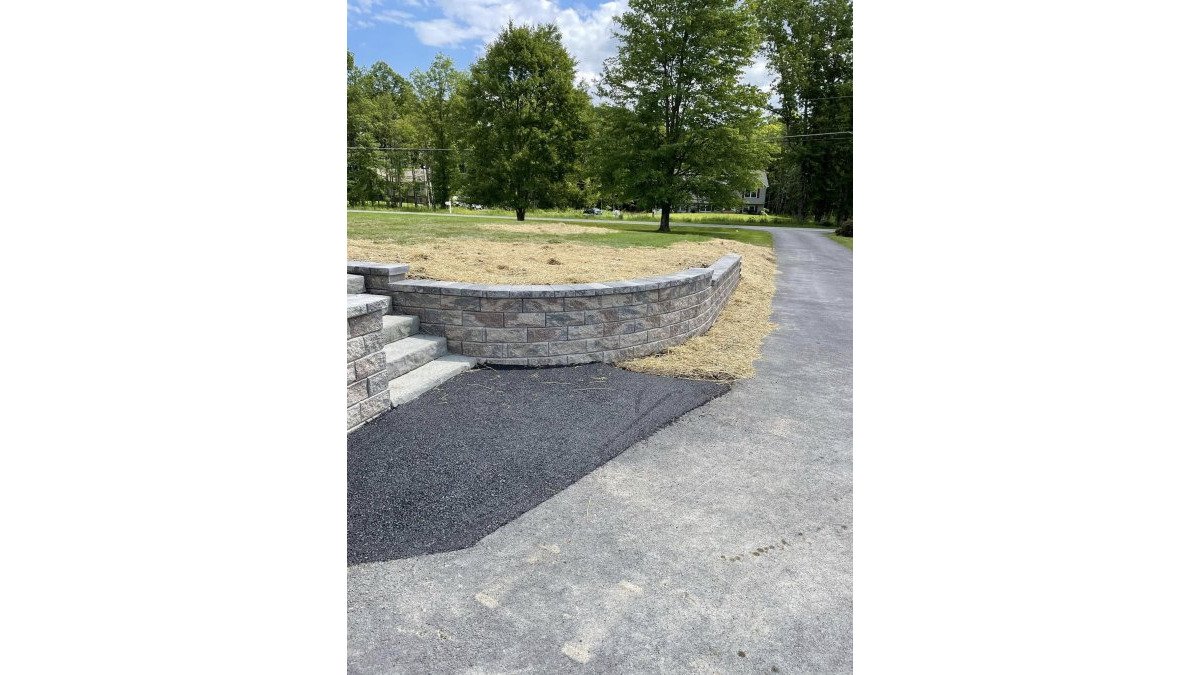
- Break a steep slope into terraced beds or a retaining wall to redirect water from the foundation.
- Group plants in odd-numbered masses of three, five, or seven so they read from the street.
- Set walkway stone on compacted gravel with edge restraint to survive freeze-thaw cycles.
- Choose dense granite and basalt for walls and steps because they absorb little water.
Table of Contents
- Front Yard Landscaping Ideas That Actually Move the Needle on Curb Appeal
- Start With a Walkway That Sets the Tone
- Landscaping Ideas for Slopes That Solve Drainage and Erosion
- Layered Planting: Trees, Shrubs, and Foundation Beds
- Color, Texture, and Seasonal Interest in Flower Beds
- Natural Stone, Rocks, and Hardscape Focal Points
- Low-Maintenance Front Yard Landscaping That Still Looks Intentional
- Planning Your Front Yard Project With Santini's Landscape
- Frequently Asked Questions
Front Yard Landscaping Ideas That Actually Move the Needle on Curb Appeal
Most front yard landscaping advice stops at "add some flowers." That's not a plan.
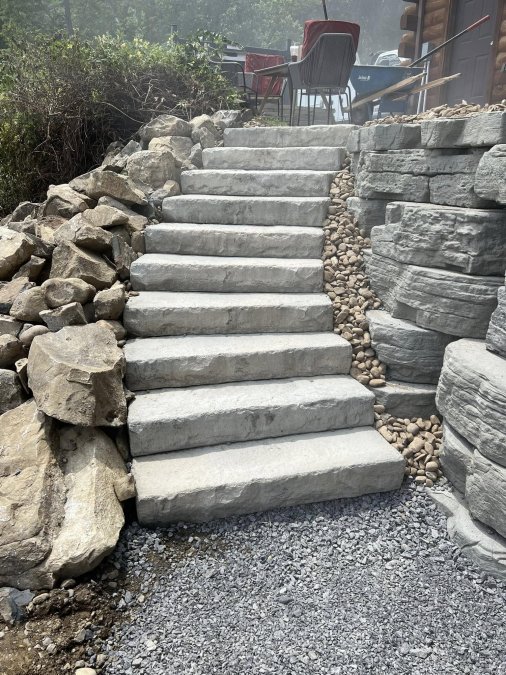
The single highest-impact move is a defined entry. A clear, well-built walkway tells visitors where to go and makes the whole house look intentional. Everything else, from flower beds to focal points, builds around that spine.
Below, we break down each idea with what it solves, where it works best, and how to combine them into one cohesive front yard landscaping plan. Dreams Set in Stone starts with a design that fits your grade, your light, and your budget.
Start With a Walkway That Sets the Tone
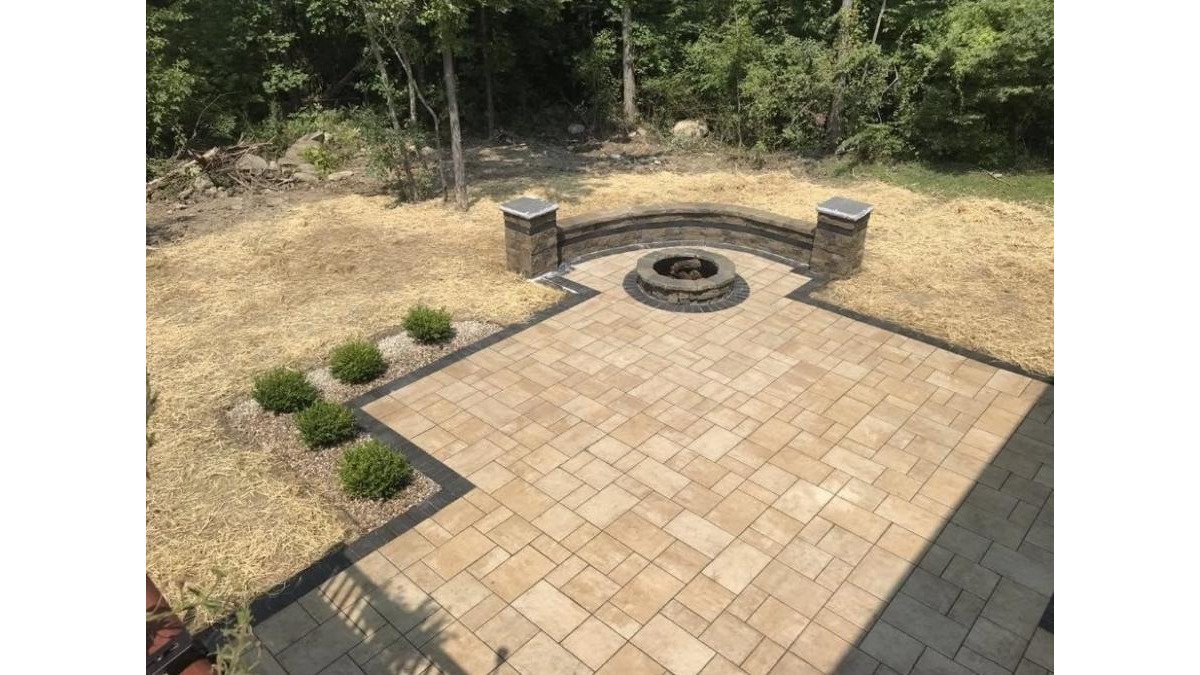
Material choice matters more than most homeowners expect. Natural stone set in a proper base holds up through freeze-thaw cycles far better than loose pavers or mulch paths.
Keep plantings along the path low, roughly knee height or below, so they frame the entry instead of swallowing it.
Watch out: skipping a compacted base under a walkway is the most common shortcut we correct. It looks fine for a season, then settles and heaves.
Landscaping Ideas for Slopes That Solve Drainage and Erosion
A sloped front yard is not a problem to hide.
Start with the grade.
Plant selection follows the water. Deep-rooted shrubs and ornamental grasses anchor soil on a slope better than shallow turf.
For a deeper look at turning a grade into a feature, see our guide to landscaping design ideas for slopes.
Best for: yards where water pools near the house or soil washes onto the driveway after storms.
Layered Planting: Trees, Shrubs, and Foundation Beds
Layered planting means arranging plants in three tiers, tall trees and shrubs at the back, mid-size shrubs in the middle, and low perennials or groundcovers at the front. This creates depth and visual interest that a single row of bushes never delivers.
Foundation planting deserves special attention. Beds along the house should soften the transition between building and yard without blocking windows. Choose shrubs that stay a manageable height and give them room to spread.
Texture carries the design between bloom cycles. Mix fine-textured foliage with broad leaves and ornamental grasses so the bed stays interesting after flowers fade.
For a proven list of plants that thrive here, browse our picks for ornamental plants for Hudson Valley gardens.
Color, Texture, and Seasonal Interest in Flower Beds
Colorful flower beds are the fastest way to add eye-catching appeal, but the best beds are planned for more than one season. A bed that peaks for three weeks in July and looks like mulch the rest of the year is not a curb-appeal asset. The goal is a bed that reads as intentional from the first thaw through the first hard freeze.
Build a four-season bloom calendar
Instead of shopping for whatever is in flower the day you visit the nursery, plan backward from a calendar. A common pattern that holds up in cold-winter climates:
- Early spring: bulbs such as daffodils, species tulips, and grape hyacinth push color before perennials wake up. Plant them in drifts behind the perennial line so fading foliage is hidden later.
- Late spring to early summer: herbaceous perennials take the handoff, salvia, catmint, and peonies for color; lady's mantle and hardy geranium for foliage and edge softening.
- High summer: coneflower, black-eyed Susan, daylily, and bee balm carry the bed. These are workhorses precisely because they tolerate heat and lean soil.
- Fall and winter: ornamental grasses (switchgrass, little bluestem) hold structure and turn color; evergreens and red-twig dogwood provide form and bark interest after the perennials are cut back.
Group each plant in odd-numbered masses of three, five, or seven rather than ones and twos. A single coneflower disappears; a drift of seven reads from the street. Repeat one or two colors across separate beds so the eye connects them.
Match plants to sun, soil, and moisture
Before you buy a single flat, walk the bed at three times of day and note hours of direct sun. Most flowering perennials want six or more hours; shade-tolerant choices like hosta, heuchera, and astilbe belong where the house shadow falls. Check drainage by digging a test hole and filling it with water, if it still holds water after a few hours, amend with compost and consider a raised bed rather than fighting the soil.
Native and drought-tolerant choices reduce watering once established and support pollinators. They also tend to handle regional soil and weather with less fuss than exotics that demand constant coddling.
Watch out: planting for peak bloom only, then leaving bare soil for the rest of the year, is the most common flower-bed mistake we correct. Layer foliage plants and grasses underneath the bloomers so the bed never goes empty.
Natural Stone, Rocks, and Hardscape Focal Points
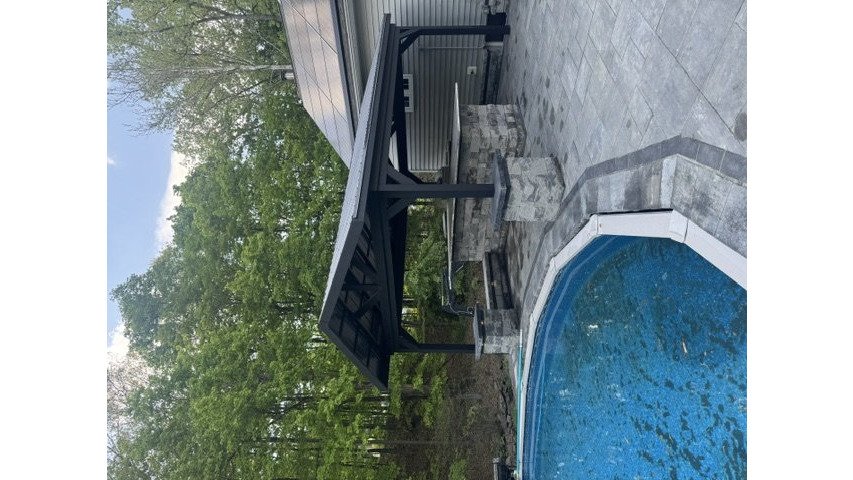
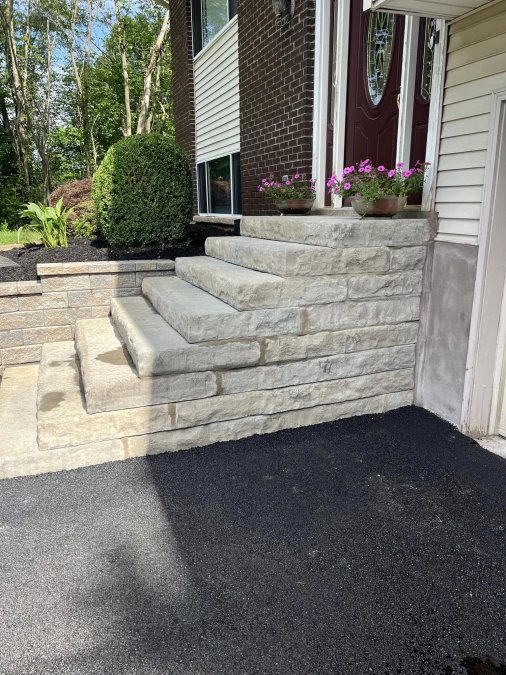
Natural stone gives a front yard weight and permanence that mulch and annuals can't match. A stone retaining wall, a boulder accent, or a stone-edged bed creates a focal point the eye lands on and holds it. This is the part of the install where material choice and base preparation decide whether the work lasts a decade or a single season.
Choose stone for the climate, not just the color
Not every stone behaves the same through freeze-thaw cycles. A few practical distinctions:
- Granite and basalt are dense and absorb little water, so they hold shape and color through repeated freezing. They are heavier to set and cost more in labor, but they are the low-risk choice for walls and steps.
- Bluestone and sandstone are common for walkways and caps. They perform well when set on a proper compacted base with good drainage, but thin, low-grade cuts can spall if water gets underneath.
- Fieldstone and boulders bring a natural, irregular look and work well as accents or low retaining walls. Their irregular shapes demand more careful fitting and a skilled hand to look deliberate rather than piled.
- Limestone and some softer stones can be beautiful but are more porous and may weather faster in wet, freezing conditions. They belong where drainage is excellent and the stone is protected.
Ask where the stone was quarried and how it is graded. Local stone that has already proven itself in the regional climate is usually a safer bet than a bargain material shipped from a different climate zone.
The base is the build
A stone wall or walkway is only as good as what is under it. We set walkway stone on compacted gravel with edge restraint so it stays put season after season. For retaining walls, a compacted crushed-stone base, proper batter (a slight lean into the slope), and drainage stone behind the wall handle the water that would otherwise push the wall over.
Use stone to define edges and focal points
Stone earns its keep when it does a job: separating beds from lawn, edging a walkway, capping a retaining wall, or anchoring a boulder accent at a bed corner.
Best for: homeowners who want a clean, modern look with durable materials and a front yard that still looks intentional in February.
For a deeper look at which materials hold up in this climate, see our guide to natural stone types for the Hudson Valley climate.
Not every stone behaves the same through freeze-thaw cycles, so match the material to the climate and the job.
| Stone type | Best for | Key difference |
|---|---|---|
| Granite and basalt | Walls and steps | Dense, absorb little water, hold shape through freezing |
| Bluestone and sandstone | Walkways and caps | Perform well on compacted base; thin cuts can spall |
| Fieldstone and boulders | Accents or low retaining walls | Irregular look; demand careful fitting and skilled hand |
| Limestone and softer stones | Where drainage is excellent | More porous and may weather faster in wet, freezing conditions |
Low-Maintenance Front Yard Landscaping That Still Looks Intentional
Low-maintenance front yard landscaping is about reducing chores, not removing design. The trick is choosing plants and materials that look good with minimal fuss.
- Choose shrubs and perennials that suit your sun exposure and soil
- Use groundcovers and mulch to suppress weeds
- Rely on hardscape and stone for structure instead of constant replanting
- Group plants by water needs so you can irrigate efficiently
Modern, clean-lined design helps here. Geometric bed shapes, minimalist plant palettes, and generous mulch or gravel areas read as deliberate and cut upkeep. A simple, well-chosen palette outperforms a crowded bed every time.
Planning Your Front Yard Project With Santini's Landscape
A cohesive front yard combines several ideas, not just one. The walkway sets the route, the beds frame it, the stone anchors it, and the plantings carry it through the seasons.
This is where we come in.
When you're ready to see what's possible for your property, explore our landscaping services or contact us to talk through your ideas and request a free quote. You Need Santini's.
Frequently Asked Questions
How do I landscape my front yard to increase curb appeal?
Start with the elements a visitor sees first: a defined walkway, a clean bed line along the foundation, and one clear focal point such as a specimen tree or stone feature. Layer plantings by height so taller shrubs sit behind lower perennials. Fix drainage before planting, because water pooling at the foundation will undo the best front yard landscaping. A phased plan, walkway and beds first, then planting and lighting, keeps the project manageable and lets each stage finish properly.
What are good landscaping ideas for slopes in a front yard?
Slopes need plants and structures that hold soil, not just decoration. Groundcovers and ornamental grasses knit the surface together, while shrubs with deep roots anchor it. Terracing with retaining walls creates usable beds and slows runoff. On steeper grades, a professional can check how water moves across the property before anything is planted. Skipping that step is the most common reason slope plantings wash out after a heavy rain.
What is the rule of three in landscaping?
The rule of three means grouping plants or features in odd numbers, usually three, five, or seven, because the eye reads odd groupings as more natural than pairs. It applies to shrubs in a bed, pots on a stoop, and boulders in a border. Vary the size within the group so one plant leads and the others support it. The rule is a starting point, not a law, but it reliably makes front yard landscaping look designed rather than scattered.
Is low-maintenance front yard landscaping worth it?
It usually is, especially for homeowners who travel or dislike weekly yard work. Low-maintenance front yard landscaping leans on native and drought-tolerant plants, groundcovers instead of bare mulch, and hardscape that needs no mowing. The trade-off is a higher upfront cost for proper soil prep and the right plant selection. Done well, it means less watering, fewer replacements, and a yard that holds its shape across seasons.
Your front yard should look intentional from the street and hold up through every season. Santini's Landscape brings premium materials, an experienced team, and a one-project-at-a-time approach to every install, so the result is craftsmanship you can see and drainage that works. Get started with Santini's Landscape and turn your front yard into the best-looking property on the block.