 blog
5 Signs Your Retaining Wall Needs Professional Repair
Last Updated: October 23, 2026
Quick Summary
The 5 signs your retaining wall needs professional repair are widening cracks, a leaning or bulging wall, drainage problems and water seepage, displaced blocks or loose rock, and soil erosion behind the wall. Catch them early and a repair can save the structure; wait and a fix becomes a full rebuild.
- Any crack you can fit a coin into deserves a professional look.
- Water is the number one killer of retaining walls, so watch for seepage and clogged weep holes.
- Never push displaced blocks back into place, as that move can trigger a collapse.
- Keep people and vehicles away from a wall that has moved noticeably in a short time.
- A wall that has leaned, bulged, or lost blocks is a rebuild, not a repair.
Table of Contents
- Why Retaining Wall Failure Happens (and Why It Matters)
- Sign #1: Retaining Wall Cracks That Keep Widening
- Sign #2: A Leaning Retaining Wall or Bulging Sections
- Sign #3: Retaining Wall Drainage Problems and Water Seepage
- Sign #4: Displaced Blocks, Loose Rock, or Visible Deformation
- Sign #5: Soil Erosion and Settling Behind the Wall
- How Urgent Is It? When to Call for Immediate Help
- Retaining Wall Repair or Replacement: How to Decide
- Frequently Asked Questions
Why Retaining Wall Failure Happens (and Why It Matters)
Most retaining walls don't fail overnight. They give warnings first, and homeowners who catch them early spend far less than those who wait.
A retaining wall holds back soil and resists lateral pressure from the ground behind it. That pressure never stops, it grows with every heavy rain, freeze-thaw cycle, and clogged drain.
When a wall starts to move, it's not cosmetic, it's a structural problem with a clock on it.
Sign #1: Retaining Wall Cracks That Keep Widening
The biggest mistake with cracks is treating them all the same. Some are harmless; others mean the wall is already losing structural integrity. Check them twice, a few weeks apart, if they're longer or wider the second time, that's crack progression and a real problem.
Hairline vs. Structural Cracks
Hairline cracks are thin surface lines, often in the mortar or finish. They usually come from normal settling and rarely threaten the wall.
Structural cracks are different:
- Vertical cracks that run through blocks, not just between them
- Diagonal cracks, which often signal settling or soil movement
- Widening cracks, the clearest sign of active wall movement
Any crack you can fit a coin into deserves a professional look. If you want to understand what's driving the failure, why you need an engineer for a retaining wall explains when an expert assessment matters.
Sign #2: A Leaning Retaining Wall or Bulging Sections
A leaning wall is never a style issue. It means the wall can no longer resist the soil behind it.
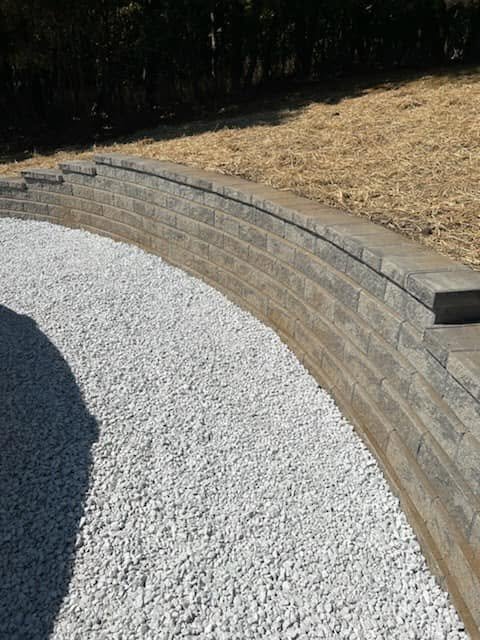
Look down the length of the wall from one end. A straight wall reads as a clean line. A failing wall shows a curve, a bow, or a tilt at the top.
What Causes a Wall to Lean or Bow
Three culprits show up again and again:
- Soil pressure: backfill that was never compacted properly keeps pushing outward
- Water pressure: saturated soil is far heavier than dry soil
- Weak reinforcement: a wall built too thin or without proper drainage gives way sooner
Small tilts get worse. They don't correct themselves.
Sign #3: Retaining Wall Drainage Problems and Water Seepage
Water is the number one killer of retaining walls. A wall that sheds water well can last decades; one that traps it starts to fail within a few seasons. Watch for water trickling through the wall face after rain, dark damp patches, white mineral stains, or puddles at the base, all signs of water buildup and a drainage system that isn't working.
Blocked Weep Holes and Water Buildup
Weep holes are the small openings that let trapped water escape. When they clog with dirt, roots, or debris, water pressure builds behind the wall with nowhere to go.
Check them after a heavy rain:
- Water flows freely from the openings
- No soil washing out around the holes
- No standing water at the wall base
If your yard has a history of drainage trouble, our guide on how to fix backyard drainage problems covers the diagnosis and the fixes.
Sign #4: Displaced Blocks, Loose Rock, or Visible Deformation
Displaced blocks are the point where a wall stops being a wall. Once blocks or stones shift out of line, the structure has already lost stability.
Walk the wall and look for:
- Blocks pushed forward or out of alignment
- Loose rock that rocks when you touch it
- Gaps opening between courses
Visible deformation means the wall is under active load it can't handle. Don't lean on it, stack anything against it, or try to push blocks back into place, that last move is a common mistake that can trigger a collapse.
Sign #5: Soil Erosion and Settling Behind the Wall
Soil erosion is the quiet sign. You may not see it from the front, but the ground behind the wall tells the story.
Check for:
- Sunken spots or dips in the soil behind the wall
- Soil washing out at the base
- Gaps between the soil and the back of the wall
When soil settles or erodes, the wall loses the support it was designed around. That shifts more load onto the wall itself and speeds up every other problem on this list.
How Urgent Is It? When to Call for Immediate Help
Not every warning sign carries the same clock. A hairline crack unchanged for a year is a monitoring item; a wall that moved an inch since last spring is a different category. The gap most homeowners fall into is treating all defects as equally urgent, either panicking over cosmetic issues or delaying action on a failing wall. Use this three-tier framework, the same triage we apply when a homeowner calls our team.
Tier 1: Monitor and Schedule an Inspection
These signs aren't emergencies, but they shouldn't be ignored. Book a professional inspection within a few weeks.
- Hairline cracks in mortar or surface finish that have not widened
- Minor damp patches on the wall face after heavy rain
- Weep holes that are slow but still passing some water
These symptoms often sit unchanged for months, then accelerate after a wet season or hard freeze. Monitoring establishes a baseline so you can tell a stable defect from an active one.
Tier 2: Restrict Access and Get a Professional Out Promptly
These signs mean the wall has lost structural capacity. Keep people, pets, and vehicles away and arrange an inspection within days, not weeks.
- A wall that has leaned or bowed noticeably in a short period
- Cracks you can fit a coin into, especially horizontal or diagonal cracks
- Blocks or stones that have shifted out of alignment but not yet fallen
The wall is still standing, but the margin for error is shrinking. Don't stack anything against it, park near it, or push blocks back into place, that last move can trigger a collapse.
Tier 3: Immediate Safety Concern
These conditions warrant immediate action: restrict access, keep everyone clear, and call a professional right away. If there's immediate risk to a structure or utility, contact emergency services first.
- Blocks or stones that have fallen out of the wall
- A wall leaning over a walkway, driveway, patio, or play area
- Visible movement near a structure, pool, or gas line
These aren't maintenance items, they're safety concerns, and the cost of waiting is measured in risk, not just repair budget.
What Makes a Wall an Immediate Concern
The difference between Tier 2 and Tier 3 comes down to three factors:
- Rate of movement. A wall slightly off-plumb for years differs from one that moved last week.
- What is downhill. A leaning wall in an open lawn is serious; above a patio, driveway, or foundation, it's urgent.
- Water involvement. Active flow through the wall face during storms signals failed drainage and building pressure.
If you're unsure which tier your wall falls into, err on the side of caution and request an inspection. Our team can help you sort it out, contact us to schedule a look. Dreams Set in Stone. You Need Santini's.
Retaining Wall Repair or Replacement: How to Decide
The repair-or-replace decision usually comes down to three questions: how far the wall has moved, whether drainage can be corrected in place, and whether the original build was sound enough to save. A wall that is straight, plumb, and draining well is a repair candidate even with surface damage. A wall that has leaned, bulged, or lost blocks has already shown it can't handle the loads behind it, patching symptoms won't change that.
The Diagnostic Questions
Work through these in order, the first "no" usually points toward replacement.
- Is the wall still straight and plumb? Sight down its length. A clean line means the structure is intact; a curve, bow, or tilt means it has moved.
- Can drainage be fixed without rebuilding? Clogged weep holes on a sound wall may just need clearing. If water seeps through the face or the backfill is saturated, drainage has likely failed deeper.
- Was the original build adequate? A wall built too thin, without proper base prep, or without drainage is a replacement candidate even if damage looks minor. Repairing an underbuilt wall is usually temporary.
Repair Scenarios
Repair is right when damage is surface-level and the structure is sound:
- Hairline cracks that haven't widened
- Clogged weep holes with no other symptoms
- Minor soil settling behind a stable wall
The fix is usually targeted: clear the drainage, restore flow, and monitor. Addressing the cause rather than the symptom can extend a sound wall's life for years.
Replacement Scenarios
Replacement is right when the wall has lost structural capacity:
- A wall that has leaned or bulged
- Displaced blocks or fallen rock
- Horizontal cracks suggesting soil pressure is pushing the wall out
Homeowners often patch a leaning wall only to see it move again after the next wet season, because the underlying soil or water pressure was never addressed. A rebuild with proper drainage and reinforcement solves the cause, not just the symptom.
Safe Homeowner Checks vs. Professional Work
You can safely do a few things yourself to inform the decision:
- Look for cracks and note their size and whether they change over a few weeks
- Watch water flow after rain and note where it appears
- Clear debris from weep holes with a hand tool
Leave these to a professional:
- Excavating soil behind the wall
- Rebuilding or resetting blocks
- Adding reinforcement or drainage
The split is simple: work requiring excavation or load redistribution can trigger a collapse if done wrong. A professional inspection also confirms what's actually causing the symptom, the piece homeowners most often get wrong.
If replacement is on the table, it pays to know what proper construction looks like so the new wall lasts. Our guide to retaining wall construction best practices walks through the details. And before you commit to a rebuild, compare your options with our breakdown of the best retaining wall materials.
| Situation | Likely Path | Why |
|---|---|---|
| Hairline cracks, wall straight | Repair | Surface issue, structure sound |
| Clogged weep holes only | Repair | Drainage fix restores function |
| Leaning or bulging wall | Rebuild | Structure has lost stability |
| Displaced blocks or fallen rock | Rebuild | Wall can no longer hold soil |
| Soil erosion behind a stable wall | Repair plus drainage | Support needs restoring |
| Horizontal cracks with movement | Rebuild | Soil pressure is overwhelming the wall |
| Underbuilt original wall | Rebuild | Repair would be temporary |
At Santini's Landscape, we take on one project at a time so your wall gets full attention from start to finish. We use premium materials and specialized equipment, and we work through drainage and soil issues upfront so the repair or rebuild addresses the cause, not just the symptom.
Frequently Asked Questions
What causes a retaining wall to fail?
Retaining walls fail most often because of poor drainage and soil pressure. When water cannot escape through weep holes or a drainage system, it builds up behind the wall and creates hydrostatic pressure that the structure was not designed to handle. Other causes include inadequate reinforcement, settling soil, tree roots, and frost heave. Over time, these forces lead to cracks, leaning, bulging, and eventually structural collapse. Regular inspection and proper drainage are key to preventing failure.
Are cracks in a retaining wall a sign of failure?
Not all cracks mean failure, but they are a warning sign. Hairline cracks under 1/8 inch may be cosmetic, but wider cracks, vertical cracks, or cracks that keep widening indicate movement and structural stress. If you see a crack that has grown over a season, or one accompanied by leaning or bulging, call a professional for an inspection. Crack progression is one of the clearest indicators that a retaining wall needs professional repair.
Why is my retaining wall leaning or bulging?
A leaning retaining wall usually means soil pressure or water pressure has exceeded what the wall can resist. This can happen when drainage problems allow water to saturate the soil behind the wall, or when the wall was not built with proper reinforcement for its height and load. Bulging or bowing sections often signal that the wall is rotating or that individual blocks are being pushed outward. Both are signs of wall movement that should be evaluated by a professional before they worsen.
What should I do if water is pooling behind my retaining wall?
Pooling water behind a retaining wall points to retaining wall drainage problems. First, check that weep holes are clear of debris and that any surface drainage is directed away from the wall. Do not attempt to dig out or alter the wall yourself, as this can worsen soil pressure. Call a professional to assess the drainage system and recommend solutions such as improved grading, French drains, or additional weep holes. Addressing water buildup early helps prevent cracks, leaning, and costly retaining wall repair or replacement.