 blog
5 Benefits of Seasonal Snow Management Contracts
Last Updated: October 22, 2026
Quick Summary
A seasonal snow management contract locks in one flat rate for plowing, shoveling, and de-icing across the entire winter, regardless of storm frequency. This shifts weather risk to the provider and gives you budget predictability, priority dispatch, and a clear written scope of work. Many property owners choose seasonal pricing after a heavy winter makes per-storm invoices unpredictable.
- Seasonal contract holders typically sit at the top of the dispatch list during snow events.
- Ask whether salt and de-icing are included or billed separately from the flat rate.
- A contract should state a specific snowfall trigger depth measured in inches.
- Compare trigger depth, service areas, ice control terms, and exclusions side by side.
- Get a certificate of insurance and an exclusions list in writing before the first storm.
Table of Contents
- Why Winter Property Owners Choose Seasonal Snow Management Contracts
- Benefit 1: Budget Predictability With a Flat Seasonal Rate
- Benefit 2: Priority Service and Faster Response Times
- Benefit 3: Seasonal vs Per-Storm Snow Removal: Which Protects Your Property
- Benefit 4: Clear Scope of Work and Fewer Surprise Charges
- Benefit 5: Consistent Care Across Every Snow Event
- Residential Snow Removal Pricing Models: Where Seasonal Contracts Fit
- Hiring Professional Snow Removal Services: What to Ask Before You Sign
- Frequently Asked Questions
Why Winter Property Owners Choose Seasonal Snow Management Contracts
A seasonal snow management contract is a fixed-fee winter maintenance agreement that covers plowing, shoveling, and de-icing for one flat rate across the whole season, regardless of how many storms hit. At Santini's Landscape, we have handled winter work across the Hudson Valley since 2004. The appeal is simple: one number, one provider, no storm-by-storm invoice guessing.
Most property owners start out paying per visit. Then a bad winter arrives, the invoices pile up, and the budget falls apart. That is usually the moment seasonal pricing starts to look attractive.
Benefit 1: Budget Predictability With a Flat Seasonal Rate
The first benefit is cost control. A flat seasonal rate locks your winter maintenance spend into one agreed figure before the first snowflake lands. You know the number in October, so you can plan around it in January.
That matters more than it sounds. Per-storm billing ties your costs to storm frequency, which nobody can forecast. A mild winter leaves you paying little; a heavy winter can double or triple what you expected.
A common approach is to split the flat rate into installment payments across the season. Many property managers find this easier to carry than a single upfront payment.
Benefit 2: Priority Service and Faster Response Times
Priority service is the second benefit, and it is the one clients ask about most. Seasonal agreement holders typically sit at the top of the dispatch list when a snow event hits.
Response time is where cheap contracts fall apart. When every property calls at once, the provider with too many pay-per-event clients cannot clear everyone quickly.
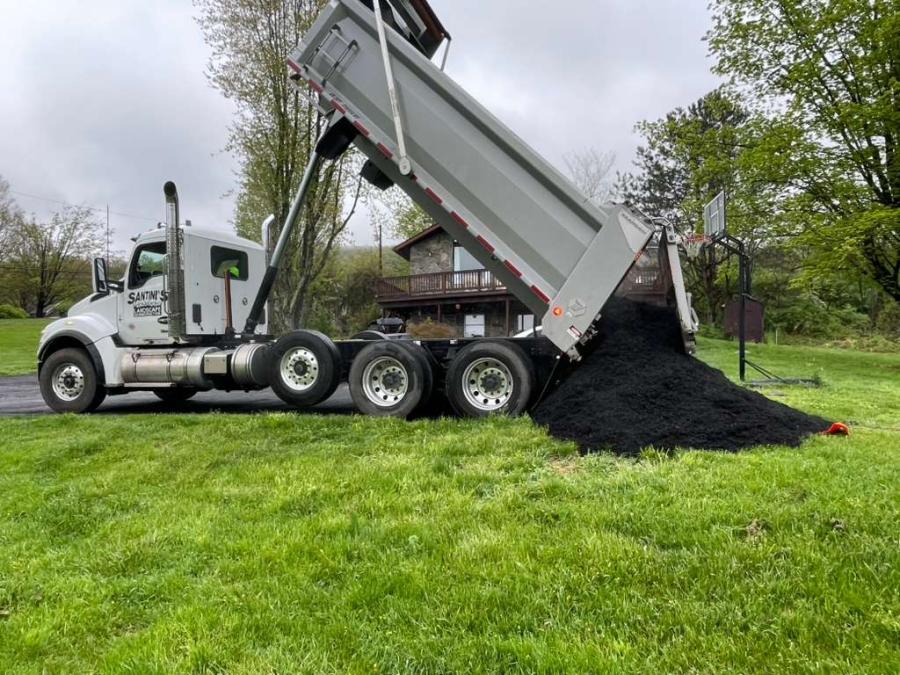
Our rule at Santini's Landscape is one project at a time, and winter work runs the same way.
Benefit 3: Seasonal vs Per-Storm Snow Removal: Which Protects Your Property
Seasonal vs per-storm snow removal comes down to who carries the weather risk. With per-storm pricing, you carry it. With a seasonal contract, the provider does.
Per-storm billing can tempt a property owner to skip a "small" snowfall to save money. Skipping service is how you get ice buildup, packed snow, and slip-and-fall exposure on walkways.
Here is the trade-off in plain terms, with the operational details that matter:
| Factor | Seasonal Contract | Per-Storm Pricing |
|---|---|---|
| Cost certainty | Fixed for the season | Varies with each storm |
| Best for | Heavy-snow areas, rental and commercial sites | Mild winters, low-traffic sites |
| Response priority | Usually higher, with defined response windows | Usually lower, dispatched as available |
| Risk of under-servicing | Low | Higher when owners skip visits |
| Billing surprises | Minimal | Possible after a big winter |
| Liability documentation | Provider typically supplies certificates of insurance and service logs | Owner may need to request proof of coverage per event |
| Service-level expectations | Often includes return visits and escalation procedures | May be limited to single visit per trigger |
Cost scenarios: when seasonal wins and when it doesn't
To see how the models compare, consider three winter scenarios for a typical commercial property. In a mild winter with few trigger events, per-storm billing may cost less because you pay only for the storms that meet the threshold. In an average winter, the two models often land close, but the seasonal contract eliminates the administrative burden of tracking invoices. In a heavy winter with back-to-back storms, per-storm costs can climb quickly, while the seasonal fee stays fixed.
Risk allocation and liability documentation
A seasonal contract should clearly state who carries liability for slip-and-fall claims, property damage from equipment, and ice-related incidents.
Service-level expectations during severe storms
Define response windows in hours, not vague promises. Ask what happens during back-to-back storms: will the provider return for a second pass, and at what trigger depth?
Neither model is wrong. The question is whether you can absorb a bad winter financially and operationally.
Benefit 4: Clear Scope of Work and Fewer Surprise Charges
A written scope of work is the fourth benefit, and it is where most disputes get settled before they start. A good snow removal contract spells out exactly what gets cleared, how often, and what costs extra.
Contract clauses to verify before you sign
- Snowfall trigger depth: The contract should state a specific accumulation depth (often measured in inches) that starts a service visit. Without a defined trigger, you and the provider may disagree all season about what counts as a "real" storm. Ask whether the trigger is measured at a specific location on your property or from a regional weather station.
- Service areas: List every area to be cleared, driveways, walkways, pathways, parking areas, mailbox access, loading zones, and accessible routes. Confirm whether areas are cleared to bare pavement or just plowed.
- Ice control and de-icing: Specify whether salt, sand, or liquid de-icer is included or billed separately. Ask about application rates and whether repeat applications after freezing rain are covered.
- Hauling and stacking: Where does snow get piled, and is removal (hauling off-site) included or extra? Stacking locations should be marked on a site map to avoid blocking drainage or emergency access.
- Repeat visits: Does the contract include return visits after a storm to address drifting or refreeze? Define how many passes are included per trigger event.
- Exclusions: What counts as an extra, ice storms, drifting, equipment damage, or unusual accumulation? Get the exclusions list in writing.
- Contract term and renewal: Note start and end dates, renewal terms, and notice periods for cancellation.
Property-specific planning and accessibility
A strong scope of work goes beyond a list of areas. It includes a site map with priority zones, entrances, accessible routes, emergency access lanes, and drainage paths that must stay clear.
How to compare agreements accurately
Ask each provider for a sample contract and compare the trigger depth, service areas, ice control terms, repeat-visit policy, and exclusions side by side. A lower seasonal rate often reflects a higher trigger depth or narrower scope, meaning you pay less but get cleared less often.
Benefit 5: Consistent Care Across Every Snow Event
Consistency is the fifth benefit, and it is the quiet one. A seasonal agreement means the same crew, the same equipment, and the same standards show up all winter. That consistency protects your property over the long run.
Consistent snow clearing does more than keep things tidy. It reduces ice management problems, keeps drainage paths open, and protects hardscaping, walkways, and ornamental plantings from snow-load damage and freeze-thaw stress.
That is the same reason we tell clients "Dreams Set in Stone" when we build outdoor spaces. The build is only half the job; caring for it through every season is the other half.
Residential Snow Removal Pricing Models: Where Seasonal Contracts Fit
Residential snow removal pricing models generally fall into three buckets: flat seasonal rate, per-storm (pay-per-event), and time-and-material. Each fits a different property and risk tolerance.
- Flat seasonal rate: one price for the season, billed upfront or in installments. Best for heavy-snow areas and owners who want cost control.
- Per-storm pricing: you pay each time the trigger depth is met. Best for mild winters and low-traffic driveways.
- Time-and-material contract: you pay for actual hours and materials used. Flexible, but the least predictable for budgeting.
For most residential properties in a heavy-snow region, the flat seasonal rate wins on budget predictability. Per-storm pricing can be cost-effective in a mild winter, but you are gambling on the weather. We would rather see a homeowner choose a fixed rate they can plan around than a variable bill they cannot.
Hiring Professional Snow Removal Services: What to Ask Before You Sign
Before you sign with any snow removal provider, ask these questions. The answers tell you more than the price does.
- Does the contract state a specific snowfall trigger depth?
- Is de-icing and salt application included or billed as an additional charge?
- What is the guaranteed response time, and what happens during back-to-back storms?
- Which areas are in the scope of work, and which are excluded?
- How is the flat seasonal rate paid: upfront, installments, or monthly?
- Is the provider insured, and can they show proof of liability coverage?
- What is the contract term and renewal process?
- Are there references from properties similar to yours?
Ask for the exclusions list in writing. A provider who cannot produce one is not ready to handle a real winter. The same goes for insurance: get the certificate before the first storm, not after.
At Santini's Landscape, winter maintenance is an extension of the same approach we bring to every project: show up, do the work right, and stand behind it. You Need Santini's.
Frequently Asked Questions
What is included in a seasonal snow management contract?
A seasonal snow management contract typically covers a set scope of work for a fixed flat rate across the winter season. Common included services are snow plowing of driveways and parking areas, walkway and pathway clearing, ice management with salt application, and a defined number of service visits tied to a snowfall trigger. The contract should list exactly which areas are cleared, where snow is piled, and what counts as an additional charge, such as hauling snow off site or treating refreeze after a thaw.
How does a seasonal snow contract differ from per-storm pricing?
With per-storm pricing, you pay for each snow event, usually based on trigger depth and the time or equipment required. A seasonal contract sets one fixed price for the whole winter regardless of how many storms hit. In a heavy winter, the seasonal rate often costs less overall; in a mild winter, pay-per-event can come out cheaper. The seasonal model trades the chance of saving money in a light year for budget predictability and priority dispatch when storms stack up.
Are seasonal snow contracts cost-effective for residential properties?
They can be, especially for homeowners who need reliable clearing before work or school and cannot afford to wait. A seasonal agreement locks in your rate before winter, spreads the cost through upfront or installment payments, and guarantees a service visit after each qualifying snow event. For long driveways, steep slopes, or properties that need walkway and ice management too, the fixed rate usually compares well against paying per event, particularly in a storm-heavy season.
What should I ask before hiring professional snow removal services?
Ask for the contract term and renewal terms, the snowfall trigger depth that prompts a service visit, and the response time you can expect during back-to-back storms. Confirm the scope of work: which surfaces are cleared, whether de-icing and salt application are included, and what triggers additional charges. Also ask about insurance and liability documentation, how they handle severe storms when demand spikes, and how you will be notified before they arrive. Get all of it in writing before signing.
Winter will not wait for a perfect contract, and a bad agreement shows up fast once the snow starts. If you want a seasonal snow management plan built around your property's actual layout and risk, talk to Santini's Landscape. We bring a clear scope of work, priority dispatch for seasonal clients, and the same craftsmanship since 2004 that we put into every patio and retaining wall. Request a free quote and get your winter plan locked in before the first storm.