 how-to
What Happens When a Site Is Not Graded Properly
Last Updated: October 30, 2026
Quick Summary
When site grading is done wrong, the ground slopes toward the house instead of away from it, so water pools against the foundation. Over time that saturated soil pushes on walls, causing cracks, basement leaks, mold, and erosion across the yard.
- Puddles that sit for hours near the house signal a flat or negative grade.
- Negative grading often comes from settled soil, raised beds, or patios installed without slope.
- Water pressure from saturated soil can lead to hairline or stair-step cracks in walls.
- Regrade by checking the slope, clearing obstructions, adding fill, compacting, and testing with water.
- Walk the grade after heavy rains to catch new low spots early.
Table of Contents
- How Site Grading Controls Where Water Goes
- Signs of Poor Yard Grading You Can Spot Yourself
- Negative Grading Toward the House and Why It Matters
- Foundation, Basement, and Crawl Space Damage From Water
- Yard Erosion Caused by Poor Grading
- How to Regrade a Yard Away From the House
- Booking Your Grading Assessment With Santini's Landscape
- Frequently Asked Questions
How Site Grading Controls Where Water Goes
Site grading is the shaping of the ground around a home so that rain and runoff flow away from the structure. When it is done right, water drains off the property. When it is done wrong, water settles against the foundation, pools in the yard, and slowly causes damage.
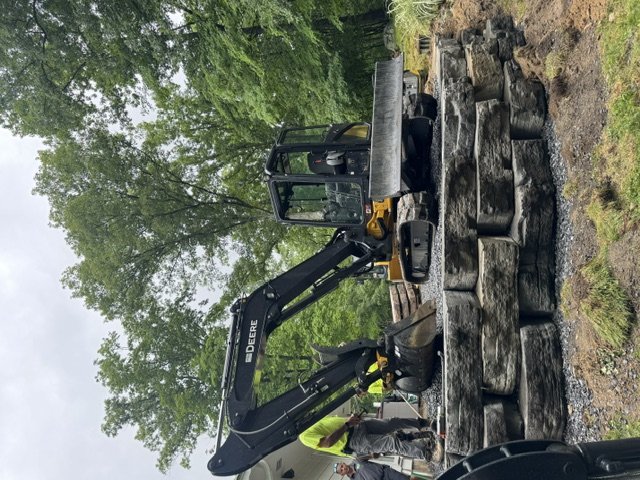
Most homeowners never think about grading until they see a wet basement or a soggy lawn. By then, the problem has usually been building for years. Good grading is quiet work. You only notice it when it fails.
The ground should slope away from the house. The exact number matters less than the direction: water should always travel away from the building.
Signs of Poor Yard Grading You Can Spot Yourself
You do not need special tools to spot a grading problem. Walk the yard after a heavy rain and look for these warning signs:
- Puddles that sit for hours near the house or in the middle of the lawn
- Soil washing away from the base of the foundation
- Damp or musty smells in the basement or crawl space
- Soft, spongy patches on the lawn that never fully dry out
- Gaps or dips where the soil has settled next to a walkway or patio
Stand at the back door during a storm and watch where the water goes. If it runs toward the house, you have found the problem.
!A homeowner in work clothes standing on a backyard lawn after rain, looking down at a shallow puddle that sits against the side of a house foundation
Use this quick reference to match each warning sign to its likely cause and the fix that addresses it.
| Warning sign | Likely cause | Fix |
|---|---|---|
| Puddles that sit for hours | Flat or negative grade near the house | Regrade the slope away from the foundation |
| Soil washing from the foundation | Runoff channeled against the wall | Reshape the grade and extend downspouts |
| Damp or musty basement smell | Saturated soil pressing on the walls | Correct grading and improve drainage |
| Soft, spongy lawn patches | Water held in compacted or low soil | Aerate, amend, or add a French drain |
| Gaps or dips near walkways | Soil settled beside hardscape | Add compacted fill and re-level |
Negative Grading Toward the House and Why It Matters
Negative grading means the ground slopes toward the home instead of away from it. This is one of the most common causes of water problems. Over time, the soil around the foundation holds moisture, which can push against the walls and lead to cracks and leaks.
Negative grading often comes from:
- Soil that settled after the house was built
- Landscaping beds that were raised over the years
- Patios or walkways installed without proper slope
- Mulch and topsoil added against the siding
Fixing negative grading usually means removing soil near the foundation and rebuilding the slope so it falls away from the house. Learn how to fix water pooling against a house foundation in a targeted guide. It sounds simple, but it requires careful measuring to get the pitch right.
Foundation, Basement, and Crawl Space Damage From Water
Water is one of the biggest threats to a home's foundation. When soil stays saturated next to a wall, it adds pressure. When the soil then dries and shrinks, the wall can shift. Repeat that cycle for years and cracks start to form.
Common damage from poor grading includes:
- Hairline or stair-step cracks in block or brick walls
- Water seeping through the basement floor or wall joints
- Efflorescence, the white powder left behind as water evaporates
- Mold or mildew in crawl spaces and lower levels
Address these signs early. Repairing a wet basement is far less costly than repairing a damaged foundation.
Yard Erosion Caused by Poor Grading
When water runs across the lawn instead of soaking in, it carries soil with it. This is erosion, and it leaves bare patches, exposed roots, and channels in the yard. Erosion also dumps sediment into low spots, which then hold even more water.
Watch for gullies forming along slopes, grass dying in the same paths each storm, and soil piling up at the bottom of a hill. These are signs that water is moving too fast or in the wrong direction. Correct grading slows the flow and guides it to a safe outlet.
How to Regrade a Yard Away From the House
Regrading is the process of reshaping the soil so water flows away from the home. On a typical install, here is how the work is approached:
- Check the current slope. Use a long level and a straight board to measure how the ground falls from the foundation. Record the drop at several points so you know where the grade is negative.
- Remove obstructions. Clear mulch, debris, and any landscaping that blocks the intended path. Pull back beds that were raised against the siding.
- Add or remove soil. Bring in good fill soil where the ground is low, and cut back high spots near the house. Avoid fill that is high in clay if the surrounding soil already drains poorly.
- Shape the slope. Aim for a steady fall away from the foundation rather than a bowl shape. The direction matters more than the exact number.
- Compact the soil. Pack the fill in layers so it does not settle again and recreate the low spot you just fixed.
- Re-seed or sod. Restore the lawn so the new surface holds together and resists erosion.
- Test with water. Run a hose or wait for rain and confirm the water moves away from the house and toward a safe outlet.
A shallow surface regrade is often enough for minor problems. Larger issues may also need French drains, swales, or downspout extensions.
Installation Details That Make a Regrade Last
- Drain slope. Buried drain pipe should fall continuously toward its outlet. A common field target is about one inch of fall per eight feet of run, but check the pipe manufacturer's guidance and local code.
- Outlet placement. Discharge to a daylight outlet, a splash block, or a graded swale that carries water away from the foundation and off the lot. Never dump a drain outlet against a wall or into a neighbor's yard.
- Filter fabric and gravel. Wrap perforated pipe in filter fabric and bed it in washed gravel so fines do not clog the openings. Skip the fabric and the drain silts up within a few seasons.
- Cleanouts. Add a cleanout at the high end and at bends so the line can be flushed. A drain you cannot service is a drain you will replace.
- Compaction in lifts. Compact fill in shallow layers, not one deep dump, or the new grade will settle and pull away from the foundation.
Permits, Property Boundaries, and Safe Discharge
Before any dirt moves, confirm where the property line sits and where runoff is allowed to go. Directing water onto a neighboring property, a public sidewalk, or a shared driveway can create a dispute or a code violation. Local rules may also require a call to the utility-location service before digging, and some areas require a grading or drainage permit for work that changes how stormwater leaves the lot. Check with the local building department and the utility-location service before the first shovel goes in.
Choosing the Right Fix by Soil, Slope, and Water Volume
Regrading is not interchangeable with a French drain or a swale. Use this decision guide:
- Surface water that ponds because the grade is flat or negative: regrade first. A drain will not fix a slope problem.
- Water that arrives from uphill or from a large roof area: a swale or dry creek bed to redirect the flow, paired with downspout extensions.
- Water that sits in the soil because it is compacted clay: aerate and amend the soil, or install a French drain to intercept subsurface flow.
- Water near the foundation or persistent flooding after every storm: treat it as a professional job. These are the warning signs that a DIY regrade can make worse.
Maintenance After the Work Is Done
Walk the grade after the first few heavy rains and look for new low spots, soil washing out at the outlet, and water standing where it used to drain. Flush cleanouts annually, clear debris from swale bottoms, and re-check that downspouts still discharge to the intended path. Small corrections early are far cheaper than a second regrade.
Dreams Set in Stone, and a grade that holds is part of that promise. You Need Santini's when the water has to go where it is supposed to go.
Booking Your Grading Assessment With Santini's Landscape
If water is pooling against your home or your yard stays soggy for days, a professional grading assessment is the best next step. Visit our excavation services page to see how the work is handled. At Santini's Landscape, the full picture is considered: slope, soil, drainage paths, and how the house sits on the lot. To get started, contact us and request a grading evaluation. A plan is then recommended that fits the property.
Every job gets full attention, because the team focuses on one project at a time. You Need Santini's when you want the water moving away from your home and a yard that holds up for years. Dreams Set in Stone, and so is a solid grade.
Frequently Asked Questions
What happens when a site is not graded properly?
When a yard is not graded properly, rainwater and snowmelt flow toward the house instead of away from it. Water can pool against the foundation, seep into basements or crawl spaces, and soften the soil that supports footings. Over time this leads to moisture problems, settling, and erosion. Correcting the slope usually involves regrading the soil so the ground falls at least several inches over the first ten feet away from the foundation, often combined with downspout extensions and drainage improvements where needed.
How can you tell if a yard slopes toward a house?
Walk the perimeter after a heavy rain and watch where water travels. If puddles form along the foundation, or water runs toward the house before draining elsewhere, the grade is likely negative. You can also set a straight board on the ground running away from the house and check whether it tilts toward the foundation. Persistent dampness, mud near the siding, and water in the window wells are other common indicators that the ground needs attention.
Can improper grading cause erosion or standing water?
Yes. Water moving across a poorly sloped surface picks up soil and carves channels, which is how erosion starts in lawns and beds. Where the ground is flat or sunken, water has nowhere to go and collects as standing water, which can stay for days and damage turf and plantings. Addressing both problems typically means reshaping the surface so water has a clear path to a safe discharge point.
Who should I hire to regrade my yard?
Regrading affects how water moves across your property and onto neighboring land, so it is worth having an experienced landscaping contractor evaluate the site before any soil is moved. Santini's Landscape takes on site preparation and drainage work across the Hudson Valley and focuses on one project at a time so each job receives full attention. Contact them for a free quote and a site assessment to determine the right approach for your property.