 ultimate-guide
Durable Materials for Outdoor Hardscaping Projects
Table of Contents
- What Makes Hardscaping Materials Durable
- Best Materials for Patios
- Natural Stone vs. Concrete Pavers
- Retaining Wall Materials
- Hardscape Drainage and Base Preparation
- Matching Durable Materials to Climate and Use
- Installation Quality: What Separates a 10-Year Patio From a 30-Year One
- Frequently Asked Questions
Last Updated: October 8, 2026
What Makes Hardscaping Materials Durable
Durable materials for outdoor hardscaping projects share three traits: they resist freeze-thaw movement, they hold their surface under foot traffic, and they sit on a base that drains. Get any one of those wrong and even premium stone will heave, crack, or settle within a few seasons.
At Santini's Landscape, we've installed patios, retaining walls, and site work across the Hudson Valley since 2004, and the lesson repeats: material choice sets the ceiling, but base preparation decides whether you reach it. A $40,000 bluestone patio on bad subgrade performs worse than a modest paver patio built right.
Hardscaping durability is the ability of an installed surface to resist frost heave, drainage failure, and load stress without cracking, shifting, or settling. Three variables drive it:
- Compressive strength of the unit, meaning how much weight it takes before it fails
- Water management, meaning how fast water leaves the base and surface
- Base depth and compaction, meaning what actually supports the load
Below, we break down the best materials for patios, how natural stone compares to concrete pavers, what holds a retaining wall, and how to match it all to your climate and how you'll use the space. Dreams Set in Stone.
Best Materials for Patios
The best patio material balances freeze-thaw resistance, surface texture, and how much maintenance you'll tolerate. In our region, natural stone and concrete pavers dominate for good reason: both handle repeated freezing and thawing when installed over a properly drained base.
Natural Stone Patios
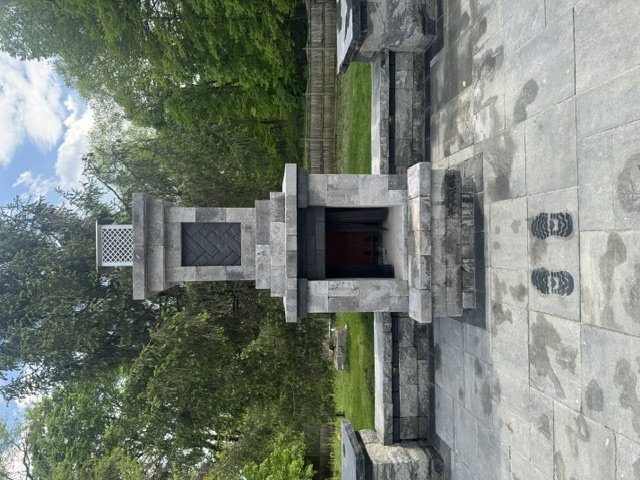
Natural stone is quarried rock cut or split into paving units, and it remains the longest-lived patio surface when the base is right. Bluestone, granite, and slate are the workhorses. Bluestone's thermal finish gives grip when wet; granite shrugs off salt and heavy use; slate delivers a tight, formal look but demands more careful sorting because some varieties delaminate.
The trade-offs are real. Natural stone costs more per square foot than pavers, and thickness varies from piece to piece, so setting takes longer. Where it wins is longevity and appearance. A well-laid bluestone patio can outlast the house.
Concrete and Clay Pavers
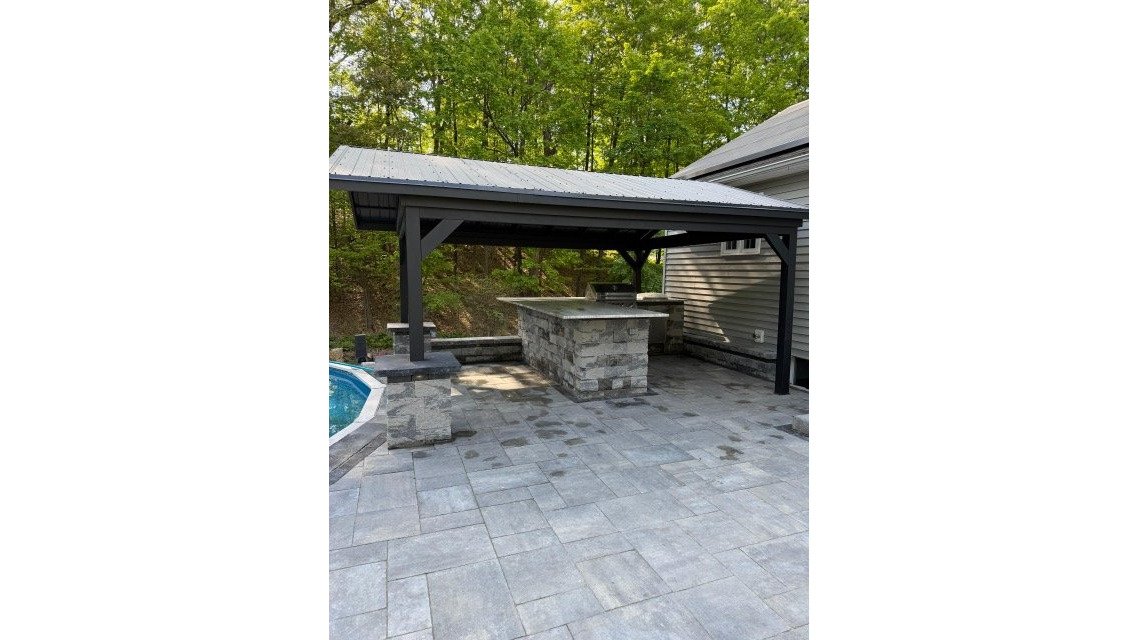
Concrete pavers are molded units engineered to a consistent size and strength, and clay pavers are fired brick made for paving. Both install over a compacted base with sand joints, and both can be lifted and relaid if a utility line needs access, which is a genuine advantage over poured slabs.
Concrete pavers handle freeze-thaw well when joints are properly filled and the base drains. Clay pavers hold color permanently because the pigment runs through the unit rather than sitting on the surface. The honest limitation: polymeric sand joints need occasional topping off, and a poorly compacted base will telegraph every rut.
Natural Stone vs. Concrete Pavers
Natural stone wins on lifespan and appearance; concrete pavers win on consistency and repairability. That's the short version. Here's how the choice actually plays out on a job site:
| Factor | Natural Stone | Concrete Pavers |
|---|---|---|
| Lifespan | Decades, often longest-lived | Long, with joint maintenance |
| Consistency | Varies piece to piece | Uniform size and thickness |
| Repairability | Difficult to match | Easy to lift and relay |
| Maintenance | Sealing, occasional resetting | Re-sand joints periodically |
| Best For | Custom, high-end patios | Curves, driveways, value builds |
If you're coming from a poured concrete slab, expect a different maintenance rhythm. Pavers and stone move as individual units, which is exactly why they survive frost better than a single rigid slab that cracks along its weakest line.
Retaining Wall Materials
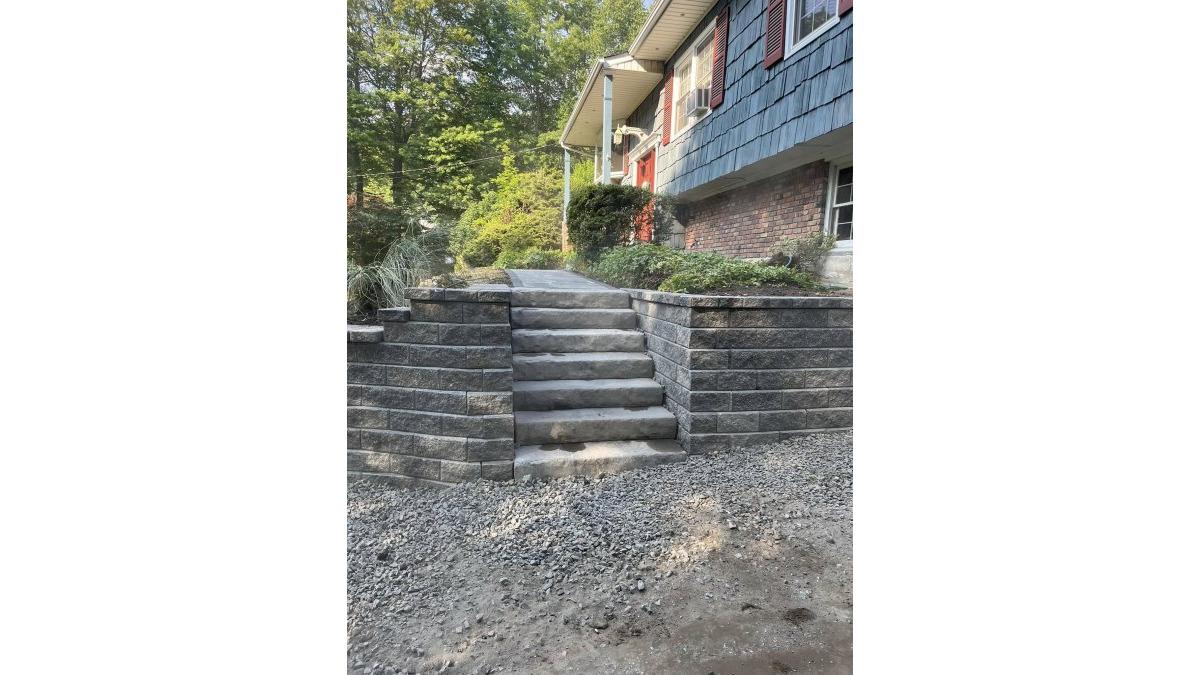
Segmental block and natural stone are the two durable choices for retaining walls, and both rely on proper drainage far more than on the block itself. A wall is a drainage structure first and a visual feature second.
Segmental retaining wall block is engineered with interlocking lips and pin systems, and it's the standard for structural walls because units stack predictably and can be reinforced with geogrid. Natural stone boulders suit lower, more rustic walls where the look matters more than precise engineering.
What most guides miss is the backfill. Every retaining wall needs gravel behind it and a drainage path to daylight. Skip that and hydrostatic pressure builds until the wall bulges or fails, no matter how heavy the block.
Hardscape Drainage and Base Preparation
Base preparation is where a hardscape is won or lost, and it starts with excavation to the correct depth, not to whatever the installer feels like digging. The rule we work to: excavate deep enough for compacted base, bedding, and the unit itself.
The layers, from the bottom up:
- Compacted subgrade - native soil, proof-rolled and free of soft spots
- Geotextile fabric - separates base from soil, stops migration
- Crushed stone base - installed in lifts and compacted between each
- Bedding layer - screeded sand or stone dust for the unit to sit on
- Surface unit - stone or paver, with joints filled
Drainage runs alongside all of it. Surface pitch moves water off the patio, and subsurface drainage handles what soaks through. On sloped properties or heavy clay, a French drain or channel drain may be the difference between a patio that lasts and one that ponds every spring. Homeowners dealing with chronic wet yards often need this solved before any stone goes down.
Matching Durable Materials to Climate and Use
Freeze-thaw cycles are the deciding factor in this region, and they punish the wrong choices. Any material that absorbs water and can't drain will spall, heave, or crack when that water freezes and expands.
Match material to use, too. A driveway takes vehicle loads and needs thicker units and a deeper base than a seating patio. A pool deck needs a surface that stays cool and grippy when wet. A fire pit area needs non-combustible units and clearance from the structure.
For freeze-thaw climates, prioritize:
- Dense, low-absorption stone like granite and bluestone
- Concrete pavers rated for freeze-thaw exposure
- Generous base depth with positive drainage
- Proper joint filling to keep water out of the base
Installation Quality: What Separates a 10-Year Patio From a 30-Year One
Installation quality, not material price, is the biggest predictor of how long a hardscape lasts. Two patios built from identical stone can differ by twenty years of service based on compaction, drainage, and edge restraint alone.
A common mistake is skipping compaction between base lifts. Dumping all the stone at once and compacting the top leaves loose material underneath that settles under load. We compact in lifts, and we proof-roll the subgrade before anything else goes down.
Edge restraint matters more than people expect. Without a proper edge, pavers creep outward over time and joints open, letting water into the base. And on any project, we figure out the drainage and soil conditions upfront so surprises don't balloon the scope mid-build.
This is where the one-project-at-a-time approach pays off. Santini's Landscape finishes a job before starting the next, so your crew isn't pulled away and your questions get answered promptly. You Need Santini's.
Frequently Asked Questions
What are the most durable materials for outdoor hardscaping?
Natural stone like granite, bluestone, and travertine rank among the most durable hardscaping materials, often lasting decades with minimal upkeep. Concrete pavers come close and cost less upfront. For retaining walls, segmental block and natural stone outperform timber, which rots in wet soil. The material matters less than the base preparation and drainage beneath it, which is why installation quality drives real-world lifespan.
Is natural stone or concrete pavers more durable?
Natural stone generally outlasts concrete pavers, especially in freeze-thaw climates where bluestone and granite resist cracking better than some poured concrete products. Concrete pavers, however, handle settling well because individual units can be lifted and reset. If you want the longest possible lifespan and don't mind higher material costs, natural stone wins. If you want easier repairs and a lower upfront investment, concrete pavers are a strong choice.
What materials are best for a retaining wall?
Segmental concrete block and natural stone are the two most reliable options for retaining walls. Both handle soil pressure and freeze-thaw cycles well when installed with proper drainage behind the wall. Timber walls cost less but rot within 10 to 15 years in wet conditions. Whatever material you choose, the wall needs gravel backfill and a drainage pipe to relieve water pressure, or it will fail regardless of what it's built from.
How does proper installation affect the lifespan of hardscaping?
Installation determines whether a hardscape lasts 10 years or 30. A properly compacted gravel base, correct base depth for your soil and frost line, and working drainage prevent the settling and cracking that ruin patios and walls. Even premium stone will shift if the base is too thin or water pools underneath. That's why we focus on site prep and drainage before any material goes down.
Which hardscape materials require the least maintenance?
Granite, bluestone, and concrete pavers need the least maintenance, typically just periodic sweeping and occasional resealing. Natural stone may need resealing every few years to resist staining. Wooden decks and timber walls demand the most upkeep, including staining and rot repair. In freeze-thaw regions, any material benefits from annual inspection of joints and drainage to catch small issues before they grow.
What should homeowners consider before choosing materials for a patio?
Start with how you'll use the space, your local climate, and your soil. A patio in a freeze-thaw region needs materials that resist cracking and a base built below the frost line. Heavy foot traffic calls for denser stone or thick pavers. Also think about maintenance tolerance and whether you want a uniform look or natural variation. Request a free quote once you've narrowed your priorities.
Choosing durable materials for outdoor hardscaping projects comes down to matching the right stone or paver to your climate, your use, and a base built to drain. That's a decision best made with a contractor who handles the whole build, not just the surface. Santini's Landscape brings premium materials, professional site preparation, and drainage solutions to every project, one at a time, so the result holds up for decades. Request a free quote and let's set your dreams in stone.