 ultimate-guide
Cost of Custom Patio Installation: 2026 Guide
Table of Contents
- What Drives Custom Patio Installation Costs
- Paver Patio Installation Cost Breakdown
- Patio Material Comparison and Pricing Factors
- Patio Site Preparation and Hidden Cost Factors
- Getting an Accurate Patio Installation Estimate
- Long-Term Ownership and Maintenance Costs
- How to Evaluate Contractor Quotes
- Frequently Asked Questions
Last Updated: October 12, 2026
What Drives Custom Patio Installation Costs
The cost of custom patio installation depends on interconnected factors beyond material price: site conditions, design complexity, labor intensity, and long-term durability.
Most homeowners get three wildly different quotes and assume someone's overcharging. A high quote often reflects proper site prep and craftsmanship; a suspiciously low one usually means corners get cut or costs balloon once hidden problems surface.
At Santini's Landscape, we've completed many custom patio installations since 2004. The difference comes down to transparency about what's included, what's optional, and what might change once work starts.
What matters: ground preparation, material selection, design complexity, site access, and regional labor rates. A poorly prepared base settles and cracks within years; premium materials outlast cheaper alternatives by decades; complex patterns demand more skilled labor than a simple slab.
Paver Patio Installation Cost Breakdown
Paver installation begins with site assessment and ground preparation, typically 20-30% of total project cost. This phase, excavation, soil grading, and base material, determines whether your patio lasts five years or fifty.
Contractors price paver work two ways: a per-square-foot installed rate or a line-item estimate. The per-square-foot number is a quick sanity check; the line-item estimate is what you should sign. Here's how the money typically splits:
- Excavation and haul-away: Removing existing sod, soil, or old concrete and disposing of it off-site.
- Base preparation: Crushed stone base, compacted in lifts, plus geotextile fabric on unstable soils.
- Bedding layer: Coarse sand or a manufactured bedding aggregate, screeded to grade.
- Pavers: The largest single material line, priced per square foot by type and thickness.
- Edge restraint: Aluminum, steel, or plastic edging plus spikes or adhesive.
- Joint material: Polymeric sand, standard sand, or a permeable joint aggregate.
- Labor: Crew hours for layout, cutting, setting, and compaction.
- Finishing: Plate compaction, joint filling, cleanup, and a final walkthrough.
As a rule of thumb, paver material runs roughly a quarter to a third of the installed price, with base prep, labor, and finishing making up the rest.
Paver material varies widely. Natural stone costs more than concrete but ages beautifully. Permeable pavers offer drainage benefits standard concrete doesn't.
Labor depends on pattern complexity and site conditions. A rectangular layout with good access might take one crew several days; an intricate design on a sloped lot with limited access takes significantly longer.
Consider the long-term picture: cheaper pavers may need replacement sooner, while quality pavers with proper base prep can offer greater longevity with minimal maintenance. The upfront difference often pays for itself through durability alone.
Patio Material Comparison and Pricing Factors
Concrete Patio Pricing
A basic concrete patio offers the most cost-effective starting point, but "basic" doesn't mean poor quality. Standard concrete pours provide a clean, functional surface that handles the elements well when properly installed.
The cost of custom patio installation with concrete depends on thickness, finish, and whether it's plain or decorative. A 4-inch broom-finish slab sits at the low end; a 6-inch reinforced trowel finish costs more. Stamped concrete costs more than plain but less than pavers, since labor is in stamping and coloring rather than setting individual units.
Concrete's advantage is speed. Its limitation is that cracks eventually appear as the ground shifts and concrete ages; control joints help but aren't a guarantee. Some homeowners accept hairline cracks; others choose materials that age more gracefully.
Sealing extends concrete's life and appearance but requires reapplication periodically, an ongoing cost that should factor into your decision.
Brick and Stone Patio Costs
Brick patios sit between concrete and natural stone, more character than concrete, more affordable than high-end stone, popular with homeowners wanting visual appeal without maximum expense.
Brick installation requires more skilled labor than concrete pouring, each brick is set individually on a prepared base. The pattern (running bond, herringbone, basketweave) affects both labor hours and visual impact.
Natural stone is the premium option. Slate, flagstone, and bluestone create distinctive looks that improve with age, developing a weathered patina many homeowners prefer to manufactured uniformity. The tradeoff is cost and installation complexity.
Natural stone requires careful site prep because individual stones vary in thickness, the base must be perfectly level to prevent rocking or settling. This precision demands experienced installers who understand irregular materials.
How Design Choices Move the Price
Material is only one lever. These design decisions change the installed cost on the same square footage:
- Pattern: A simple running bond is the fastest to lay. Herringbone, basketweave, and circular patterns add cutting time and waste.
- Borders and banding: A contrasting border looks premium but adds a second material and extra cuts.
- Curves and radius edges: Every curve means more cuts and more offcuts. Straight edges are cheaper.
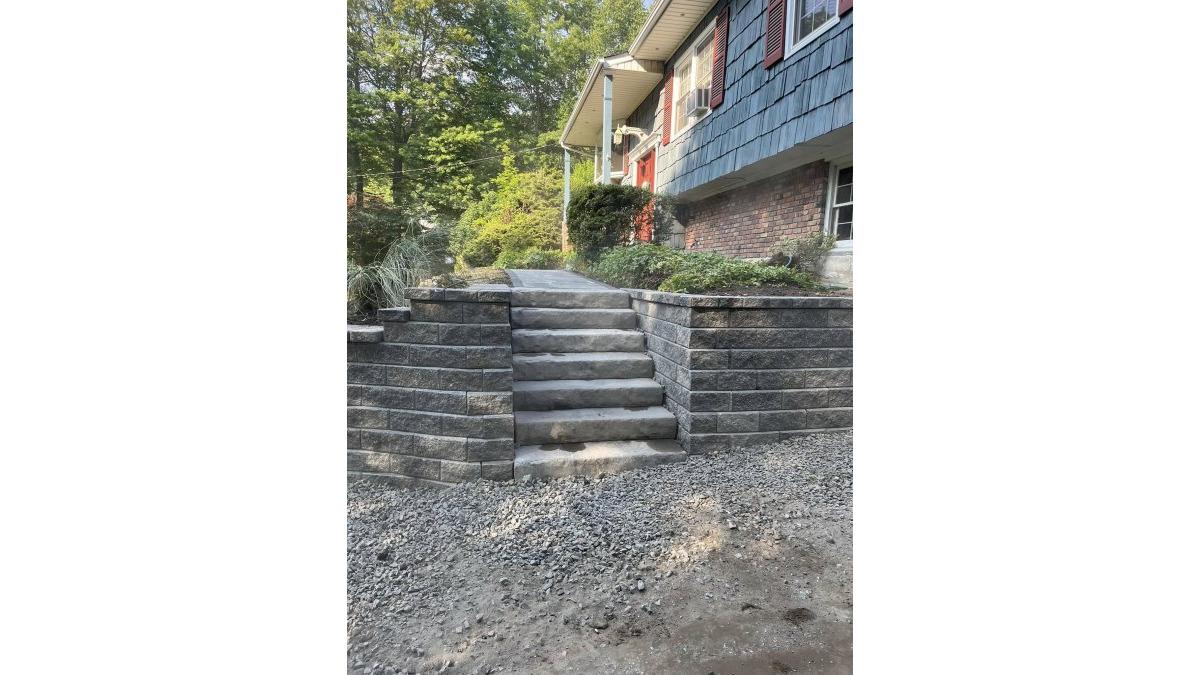
- Steps and elevation changes: Each step adds base work, risers, and often a retaining element.
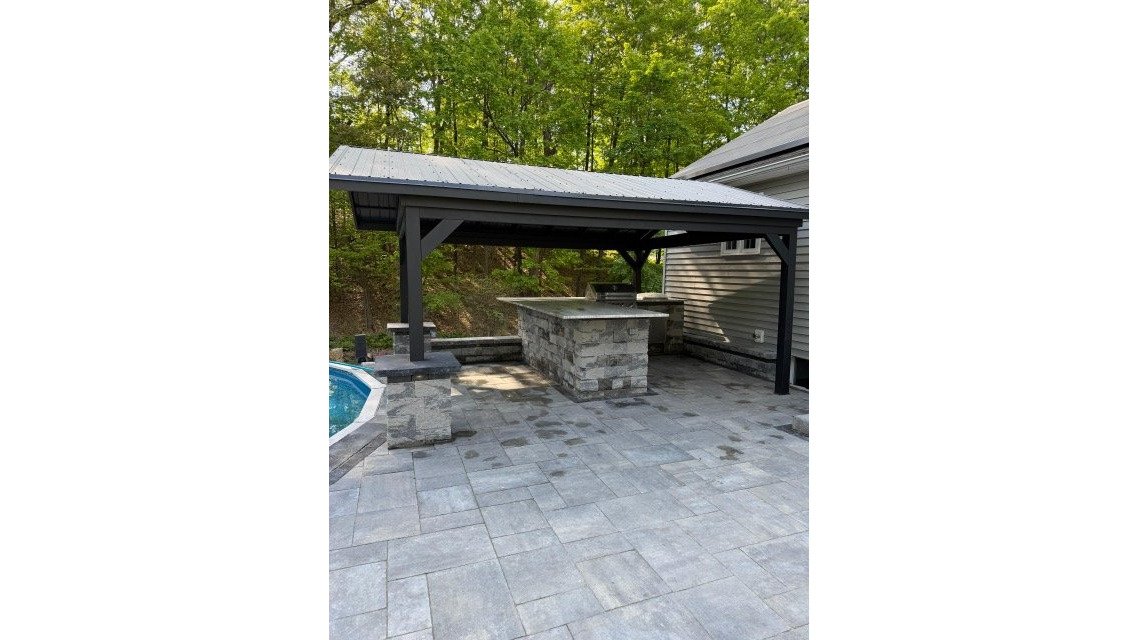
- Integrated features: Seat walls, fire pits, pillars, and lighting each carry their own material and labor lines.
- Permeable systems: Open-graded base and joint aggregate cost more upfront but can reduce drainage work elsewhere.
If budget is tight, prioritize the base and drainage first, then spend on pattern and borders. A well-built simple patio outperforms a fancy one on a weak base every time.
Patio Site Preparation and Hidden Cost Factors
Site preparation is where estimates diverge most.
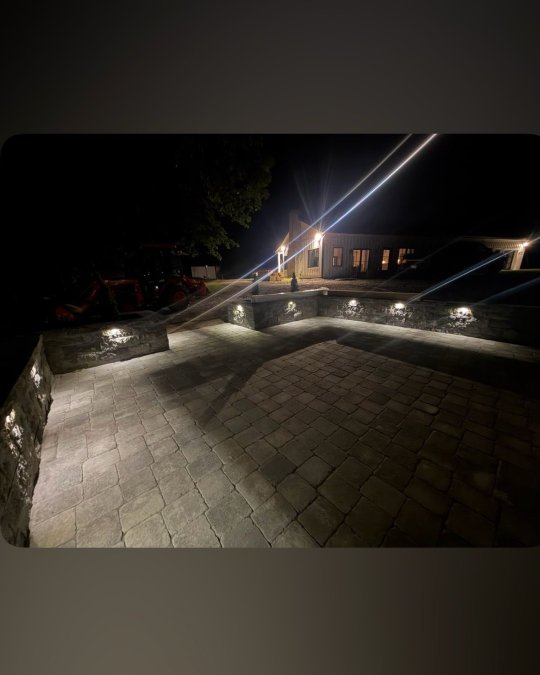
Excavation depth depends on climate and soil.
Grading and leveling are non-negotiable. A patio on uneven ground settles unevenly, creating puddles, cracks, and a surface that looks wrong, consequences that appear within the first year.
Base material, typically crushed stone or gravel, prevents settling, with thickness varying by climate and soil.
Drainage often surprises homeowners. If your yard drains poorly, the patio becomes a collection point for water.
Access and site conditions affect labor efficiency. A narrow side yard means carrying materials by hand; a sloped lot needs more careful grading; mature trees require root protection and careful equipment placement.
Getting an Accurate Patio Installation Estimate
A proper estimate requires a site visit and detailed conversation about your vision, phone quotes and online calculators can't account for your property's specific conditions.
Our estimates include site prep and excavation, base material and grading, the patio surface, edge treatments, and drainage work, plus a note on what's excluded, like landscaping or irrigation adjustments.
A detailed estimate breaks costs into line items rather than a lump sum, so you can see where money goes and where you might adjust scope.
Red flags: vague descriptions like "site prep" without detail, no base material specifications, and prices significantly lower than other bids.
Ask about their experience with your specific material. A concrete specialist may be less skilled with natural stone; a contractor familiar with your local soil and climate understands the challenges you'll face.
Long-Term Ownership and Maintenance Costs
Initial installation cost is only part of the investment, maintenance, repairs, and eventual replacement should factor into your decision.
Concrete needs sealing periodically and occasional power washing; cracks may need patching. After some years, the surface may need resurfacing or replacement. Cumulative maintenance adds significantly to the initial investment.
Brick patios need joint repair as mortar or sand deteriorates, and weeds grow between pavers if joints aren't maintained. Efflorescence, white salt deposits, may require cleaning. Manageable, but ongoing.
Natural stone develops character but still needs maintenance: sealing against stains, power washing to remove algae and moss, and occasional stone replacement, expensive if the original material is no longer available.
Your material choice commits you to a maintenance schedule. If you won't maintain a patio properly, choose materials that age gracefully without intervention. If you will, premium materials reward that effort with longevity and beauty.
How to Evaluate Contractor Quotes
Getting multiple quotes is essential, but comparing them requires understanding what's actually included in each.
Ask each contractor the same detailed questions: How thick is the base? What sand or gravel? How is drainage handled? What warranty? What timeline? Will surrounding plants and structures be protected?
Experience matters. A contractor with extensive experience installing custom patios anticipates problems before they occur, knows which materials perform best in your climate, and budgets for site challenges accurately.
Investigate references and past work. See completed projects and talk to previous customers: Did the contractor finish on time? Was quality as promised? Did problems emerge after completion?
Dreams Set in Stone isn't just a slogan, it's how we approach every project.
The lowest bid isn't always the best value, and the most expensive isn't necessarily best either.
Choosing the right contractor for your patio project determines whether you'll enjoy your outdoor space for decades or deal with problems within years. At Santini's Landscape, we bring extensive experience in custom patio design, professional site preparation, and quality craftsmanship to every project.
Frequently Asked Questions
What factors affect the cost of a custom patio installation?
Custom patio installation costs depend on material choice, patio size, site conditions, ground preparation needs, and labor complexity. Drainage issues, poor soil, difficult access, and elaborate finishes all increase costs. The scope of work, whether you need grading, leveling, and excavation, significantly impacts the final price. Each project is unique, which is why getting a detailed estimate from a professional contractor matters.
How much should a 12x12 patio cost installed?
A 12x12 patio (144 square feet) pricing depends entirely on material type, site conditions, and labor. Concrete costs less than pavers or natural stone. Ground preparation, drainage, and access also affect the total. Since every yard is different, the best approach is requesting a free estimate from a contractor who can assess your specific site and provide itemized pricing.
Which patio material is the most affordable to install?
Plain concrete typically offers the lowest installed cost per square foot. Stamped or colored concrete costs more but still less than pavers or natural stone. However, affordability at installation doesn't always mean lowest lifetime cost, some materials require more maintenance or replacement sooner. Consider both upfront cost and long-term durability when choosing your patio surface.
What should a patio installation estimate include?
A complete estimate should itemize site preparation, material costs, labor, excavation, base preparation, grading, drainage solutions, and finish work. It should specify material types and quantities, patio dimensions, and timeline. The estimate should also address site-specific factors like difficult access or soil conditions that might add costs. A transparent, detailed estimate helps you understand where your money goes and compare quotes fairly.
How long does custom patio installation take?
Timeline depends on patio size, material, and site conditions. A small concrete patio might take some time from start to finish. Larger projects with pavers or natural stone take longer. Site preparation, including excavation and grading, adds time upfront. Weather and soil conditions also affect scheduling. Your contractor should provide a realistic timeline during the estimate process.
Will a patio add value to a house?
A well-designed, professionally installed patio enhances outdoor living space and curb appeal, which many buyers value. However, the return on investment varies by location and market conditions. A quality patio can contribute positively to resale value, depending on the neighborhood and overall property condition. Beyond resale value, the immediate benefit is creating an enjoyable outdoor space for your family.