 ultimate-guide
How to Choose Landscape Design Materials: A 2026 Guide
Table of Contents
- Start With Site Analysis and Topography
- Natural Stone vs Concrete Pavers Pros and Cons
- Permeable Landscape Materials for Drainage
- Best Materials for Retaining Walls
- Balancing Aesthetic and Utilitarian Needs in Landscape Design Materials
- Lifecycle Cost and Maintenance of Landscape Design Materials
- DIY vs Professional Installation, Waste, and Material Compatibility
- Frequently Asked Questions
Last Updated: September 30, 2026
Start With Site Analysis and Topography
Choosing landscape design materials starts with reading the ground, not the catalog. A site analysis documents slope, soil type, drainage patterns, sun exposure, and how water moves across the property before and after a storm.
Skip this step and you will pay for it later. Materials that look right in a showroom fail when the base beneath them shifts, when runoff has nowhere to go, or when a north-facing slope never dries out. In the Hudson Valley, freeze-thaw cycles punish anything installed over poorly compacted or badly drained subgrade.
A proper analysis covers:
- Topography: Elevation changes, slope percentage, and where water naturally collects
- Soil composition: Clay-heavy soils drain slowly and heave in winter; sandy soils shift without stabilization
- Drainage paths: Existing swales, downspout discharge points, and any standing water after rain
- Sun and shade: Determines which ground cover and plantings will actually survive
- Access: How equipment and pallets of stone reach the work area
At Santini's Landscape, we treat this as the foundation of every project. Get the site analysis wrong and no material choice can rescue the install.
Natural Stone vs Concrete Pavers Pros and Cons
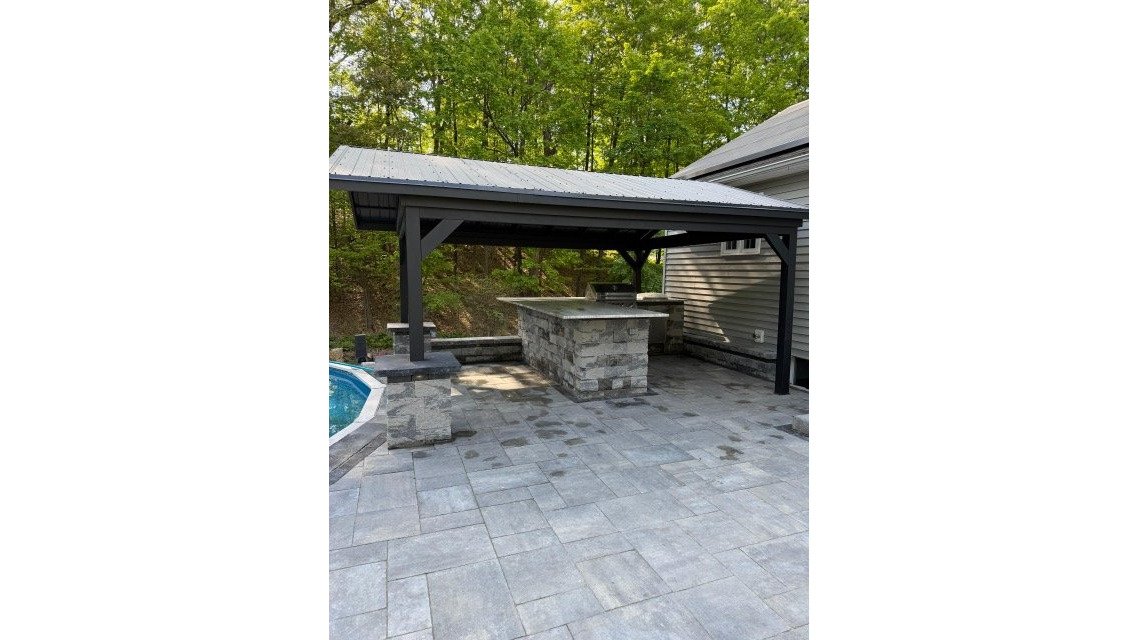
Natural stone and concrete pavers both perform well, but they solve different problems. Natural stone offers unmatched variation and ages into a weathered patina. Concrete pavers offer uniform color, tighter tolerances, and easier replacement of individual units.
Here is the honest comparison:
| Factor | Natural Stone | Concrete Pavers |
|---|---|---|
| Appearance | Unique, irregular, ages naturally | Consistent, manufactured uniformity |
| Durability | Decades with proper base | 20-30 years typical |
| Maintenance | Periodic sealing, occasional resetting | Re-sanding joints, occasional sealing |
| Repair | Matching replacement stone is difficult | Swap single units easily |
| Permeability | Depends on joint spacing and base | Permeable options available |
| Best for | Feature areas, naturalistic designs | Driveways, large patios, uniform layouts |
The real difference comes down to how much variation you want and how easily you need to repair damage later. Bluestone and granite handle heavy freeze-thaw better than softer sedimentary stone, but they cost more and demand more skill to cut and set.
What most guides miss is that the base layer matters more than the surface material. A perfectly good paver on a bad base fails. A modest stone on a properly compacted, well-drained base lasts decades.
Permeable Landscape Materials for Drainage
Permeable landscape materials let water pass through the surface into the ground instead of running off. For properties with drainage problems, this is not a design preference. It is a functional requirement.
Permeability comes from three things working together: the surface material, the joint spacing, and the aggregate base beneath. Permeable pavers with open joints, gravel, and permeable jointing aggregate all allow infiltration. But if the base layer is compacted clay, water still has nowhere to go.
Options that work in practice:
- Permeable pavers with open-graded aggregate between units
- Crushed stone and gravel for paths, drive aprons, and utility areas
- Permeable jointing aggregate that locks units while allowing infiltration
- Rain gardens and bioswales planted with native species to slow and absorb runoff
Many homeowners dealing with years of standing water are told the problem is unfixable without tearing up half the yard. That is usually not true. Correct grading, a properly sized aggregate base, and permeable surfacing solve most residential drainage issues without a full excavation.
EPA guidance on green infrastructure and stormwater management
Best Materials for Retaining Walls
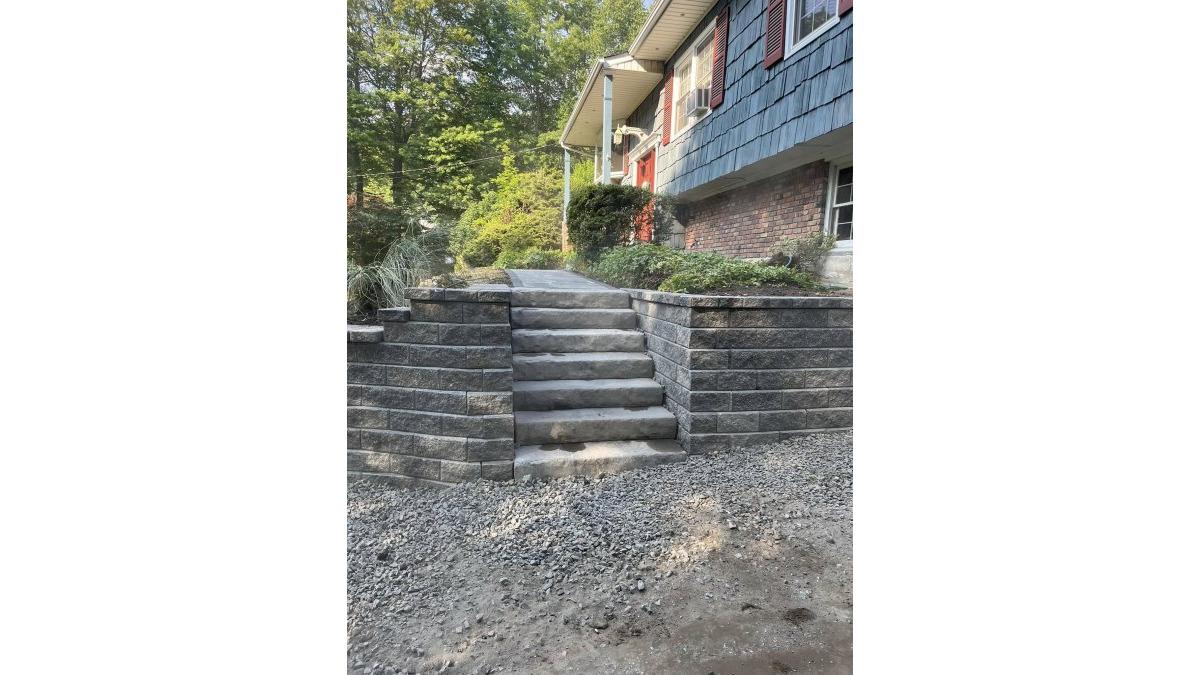
The best materials for retaining walls are those that handle lateral soil pressure, drain freely, and resist freeze-thaw movement. Segmental block, natural stone, and poured concrete each have a place, but the drainage behind the wall matters more than the face material.
Segmental retaining wall blocks interlock and are engineered for specific heights and load conditions. Natural stone offers a more organic look and works well for lower walls and terracing.
What determines whether a wall lasts:
- Base preparation: Compacted, level, and below frost depth
- Drainage: Gravel backfill and a drainage path so water never sits behind the wall
- Compaction: Backfill placed and compacted in lifts, not dumped in one pass
- Reinforcement: Geogrid for taller walls or those under surcharge loads
Balancing Aesthetic and Utilitarian Needs in Landscape Design Materials
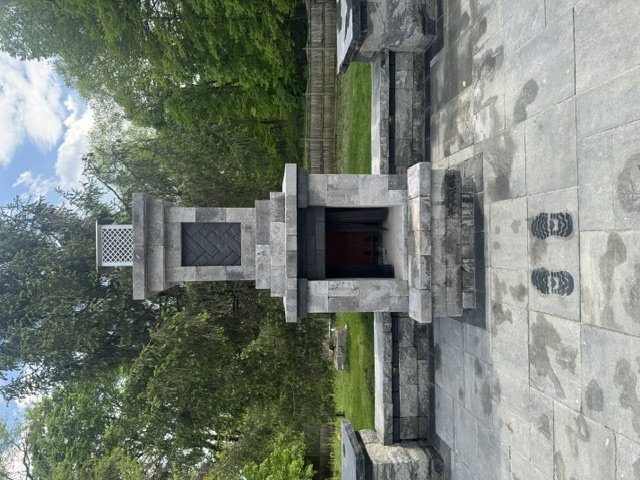
| Material | Install Difficulty | Why |
|---|---|---|
| Gravel and crushed stone | Low | Minimal base prep, easy to spread and level |
| Segmental retaining wall block | Moderate | Requires compacted base, leveling, and drainage detail |
| Concrete pavers | Moderate | Demands precise base compaction and joint sand |
| Natural stone flagstone | High | Irregular thickness requires skilled cutting and setting |
| Poured concrete | High | Formwork, reinforcement, and curing expertise needed |
| Permeable pavers | High | Open-graded base and joint aggregate must be exact |
Lifecycle Cost and Maintenance of Landscape Design Materials
Lifecycle cost is the total you spend over the life of the material, not the price on the quote. Upfront cost is only one line. Maintenance, repair, replacement, and how long the material actually lasts all belong in the comparison.
| Material | Upfront | Ongoing Maintenance | Expected Lifespan |
|---|---|---|---|
| Concrete pavers | Moderate | Re-sanding, occasional sealing | 20-30 years |
| Natural stone | Higher | Periodic sealing, rare resetting | 30+ years |
| Gravel | Low | Raking, topping up | 5-10 years |
| Permeable pavers | Moderate to high | Joint aggregate refresh | 20-30 years |
DIY vs Professional Installation, Waste, and Material Compatibility
Three things separate a project that lasts from one that fails: who installs it, how waste is handled, and whether the materials actually work together.
- De-icing salts: Sodium chloride and calcium chloride can pit certain natural stones, especially limestone and some sandstones. Sealers help, but the wrong salt still shortens surface life.
- Fertilizers: High-nitrogen fertilizers can stain or etch concrete pavers and some stone types if they sit on the surface. Rinse after application.
- Pool chemicals: Chlorine and muriatic acid used in pool maintenance can discolor or degrade nearby stone and concrete. Keep splash zones in mind when selecting materials for pool decks.
- Mortar and stone: Some natural stones, particularly those with high porosity or iron content, can stain or react with mortar. A test piece before full installation saves headaches.
- Metal edging and stone: In wet conditions, dissimilar metals and stone can create galvanic reactions that accelerate corrosion. Use compatible edging materials.
Frequently Asked Questions
What are the most durable materials for outdoor patios?
Natural stone like granite, bluestone, and slate offers the longest lifespan, often exceeding 50 years with proper installation. Concrete pavers can last 30 to 50 years and are easier to replace if damaged. Porcelain pavers resist fading and staining well in freeze-thaw climates. The key to durability is a properly compacted base layer and correct drainage, which prevent settling and cracking regardless of material choice.
How do I choose between natural stone and concrete pavers?
Consider your budget, desired look, and climate. Natural stone provides unique colors and textures but costs more and requires more installation skill. Concrete pavers offer consistent color, lower upfront cost, and easier repairs. In freeze-thaw regions, both work well when installed on a proper base. Visit a supplier to see samples in person, and ask your contractor about local availability and long-term performance.
What factors should I consider for landscape drainage when choosing materials?
Permeability is critical. Choose materials like permeable pavers, gravel, or mulch that allow water to infiltrate. Assess your soil type and slope; clay soils need more drainage help. Incorporate a base layer of compacted aggregate and consider French drains or dry wells. Proper drainage prevents erosion, protects your home's foundation, and extends the life of your hardscape. A professional site analysis can identify the best solution for your property.
Are sustainable landscaping materials worth the investment?
Yes, for many homeowners. Recycled concrete, reclaimed brick, and locally sourced stone reduce environmental impact and can lower transportation costs. Permeable materials manage stormwater, reducing erosion and runoff. While some sustainable options have a higher upfront price, their durability and low maintenance often save money over time. They also contribute to curb appeal and may qualify for local stormwater incentives.
How do I match landscape materials to my home's architectural style?
Start with your home's exterior colors and textures. Brick homes pair well with bluestone or brick pavers; modern homes suit large-format concrete or porcelain pavers; rustic homes look natural with flagstone and boulders. Repeat architectural shapes and lines in your hardscape. Bring photos of your home to your contractor, and request material samples to view on-site. A cohesive palette ties the landscape to the house.
What is the best way to maintain hardscape materials over time?
Regular cleaning and sealing extend the life of most hardscapes. Sweep debris, rinse with a hose, and use a mild cleaner for stains. Seal natural stone and concrete pavers every 2 to 3 years to protect against moisture and freeze-thaw damage. Inspect for cracks or settling annually and address issues early. Keep joints filled with polymeric sand to deter weeds and maintain stability.