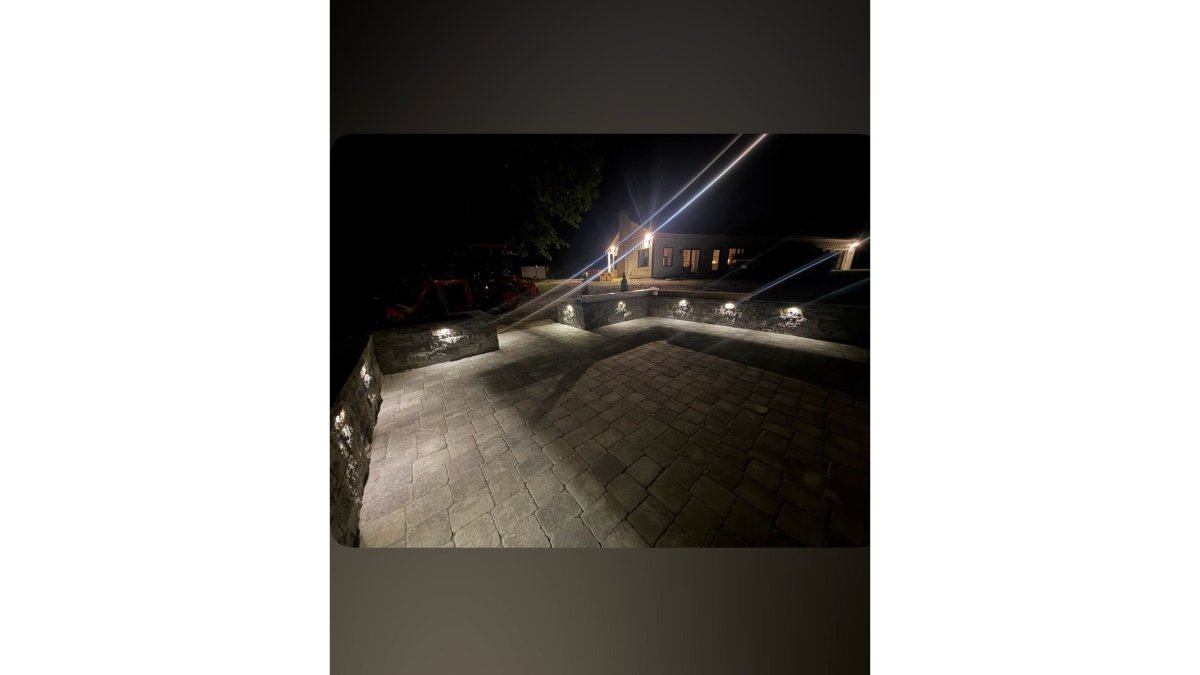
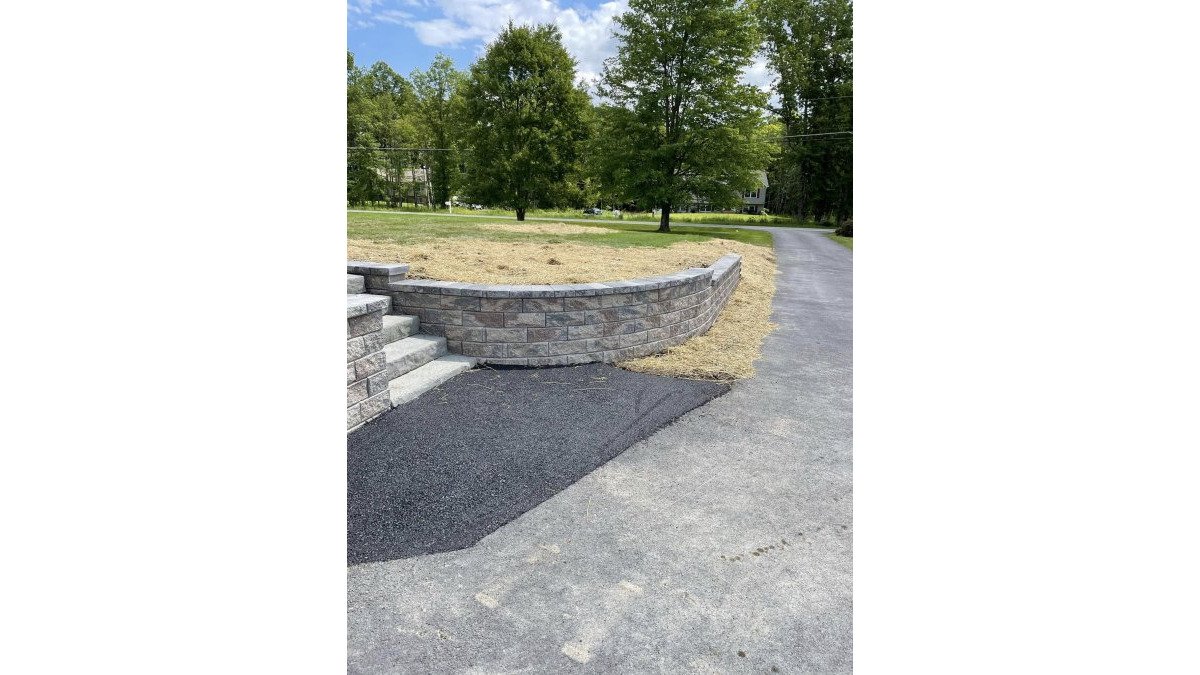
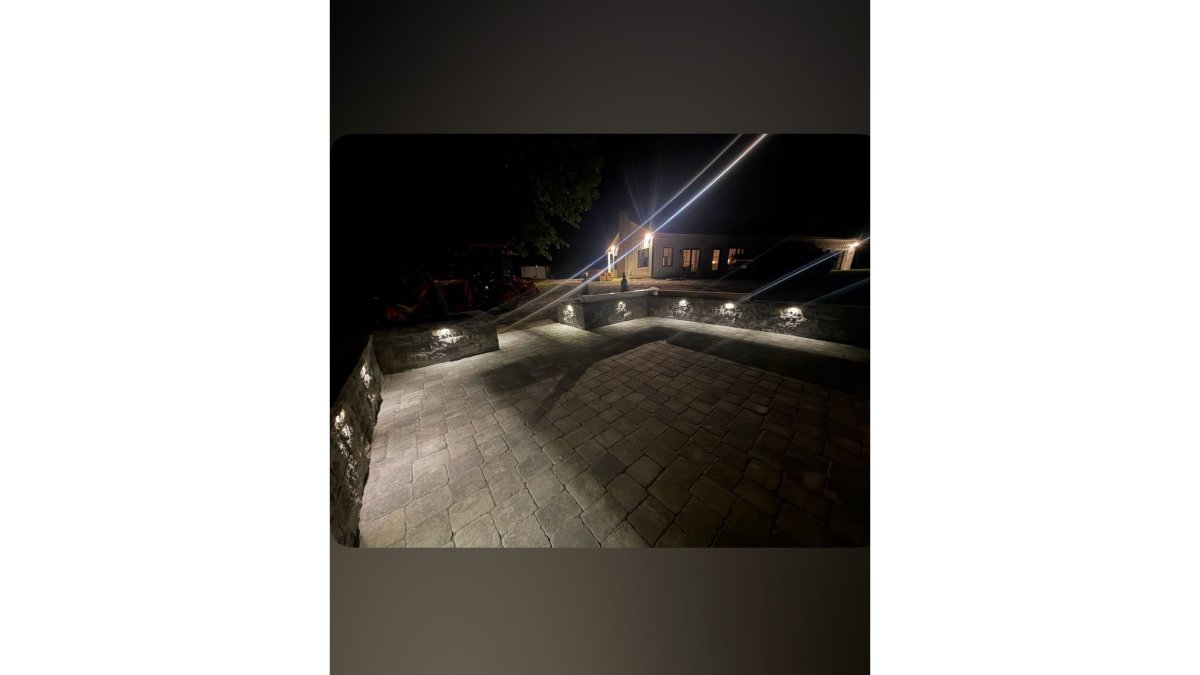
 How-to
How Long a Paver Patio Lasts and What Decides It
Last Updated: November 18, 2026
Quick Summary
A paver patio can last for decades when the base is built right and the surface is maintained. The stone is rarely the weak link, the compacted base, bedding layer, edge restraints, and drainage decide the real service life. A cracked paver is a small fix, but a settled base is a rebuild.
- Pavers typically last 25-50+ years, while poured concrete often needs major repair sooner.
- Poor drainage is the top cause of settlement under a paver patio.
- Refill joint sand as it settles and pull weeds early to protect the joints.
- Lift and reset a few sunken pavers, but widespread settlement means the base has failed.
- Ask what the product warranty covers and what the workmanship warranty covers before you sign.
Table of Contents
- How Long Does a Paver Patio Last in Practice
- Pavers vs. Concrete Patio Lifespan: A Side-by-Side Look
- Paver Patio Installation Base and Drainage Decide the Decades
- What Factors Affect How Long a Paver Patio Lasts
- Paver Patio Maintenance That Adds Years
- Paver Patio Repair and Leveling: When to Fix Instead of Replace
- Warranty and What to Expect From a Paver Patio
- Request a Free Quote for Your Paver Patio
- Frequently Asked Questions
How Long Does a Paver Patio Last in Practice
A paver patio can last for decades when the base is built right and the surface is maintained. The stone is rarely the weak link. The ground under it is.
That answer surprises people. Most shoppers compare paver colors and patterns. Few ask what happens below the surface.
Below, we break down the real lifespan of a paver patio, what shortens it, and how to tell when repair beats replacement. Dreams Set in Stone starts with what you cannot see.
Expected Lifespan of Pavers Versus the Whole Patio System
The paver and the patio are two different things. A single concrete paver can hold up for decades. The patio system around it includes the compacted base, the bedding layer, the edge restraints, and the drainage. That system decides the real service life.
- Paver surface: can last for decades with normal use
- Base and bedding: the part that fails first when water gets in
- Edge restraints: keep the field locked tight
- Drainage: moves water away before it undermines the base
A cracked paver is a small fix. A settled base is a rebuild.
Pavers vs. Concrete Patio Lifespan: A Side-by-Side Look
Pavers and poured concrete age in very different ways. Concrete is one solid slab, so it cracks as a unit when the ground moves. Pavers flex as individual units and can be lifted and reset. That difference drives the whole comparison.
| Feature | Paver Patio | Poured Concrete |
|---|---|---|
| Typical lifespan | 25-50+ years | Often shorter before major repair |
| Cracking | Isolated to single units | Cracks run across the slab |
| Repair method | Lift and reset individual pavers | Patch or replace sections |
| Freeze-thaw response | Flexes with ground movement | Rigid, prone to cracking |
| Surface look over time | Retains texture and color | Can stain and spall |
| Long-term value | High, repairable | Lower, harder to fix |
The takeaway is simple. Pavers cost more to install but stay fixable for decades.
Paver Patio Installation Base and Drainage Decide the Decades
Installation quality is the single biggest factor in how long a paver patio lasts. A deep, compacted base and correct drainage do more for longevity than any brand of stone. Skip either, and even premium pavers will move within a few seasons.
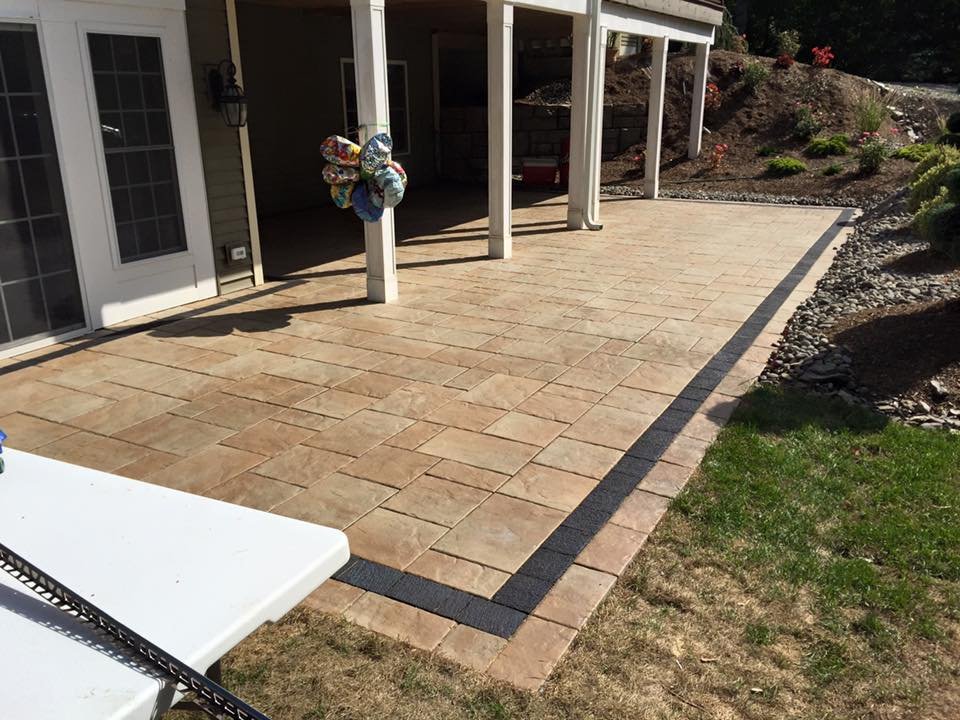
The Base Construction Checklist We Work From
A typical base sequence for a paver install looks like this.
- Excavate to the right depth for base, bedding, and paver
- Grade the subsoil so water runs away from the house
- Lay geotextile fabric to stop soil migration
- Add crushed gravel in lifts and compact each lift
- Check slope and grade with a level and string lines
- Screed a level bedding layer of sand
- Set edge restraints and pin them
- Lay pavers, cut edges, and compact the field
- Sweep joint sand or polymeric sand into the joints
For a deeper look at soil prep under heavy stone, read our guide on preparing backyard soil for heavy stone pavers.
What Factors Affect How Long a Paver Patio Lasts
No single number covers every patio. Longevity depends on where you live, how the space is used, and what it is made of. Here is what moves the needle most.
- Climate: freeze-thaw cycles, snow, rain, and sun exposure all stress the surface
- Foot traffic: normal use is fine; heavy loads need a stronger build
- Vehicle traffic: driveways and parking areas demand a thicker base
- Drainage: poor runoff is the top cause of settlement
- Material quality: denser stone resists wear and fading better
Freeze-thaw cycles are the big one in cold regions. Water seeps into joints, freezes, and pushes units apart. Good drainage and tight joints are your defense.
Material Choice: Concrete, Clay Brick, and Natural Stone
Each paver material ages differently, and the range of service life within a single category is wider than most homeowners expect.
Concrete pavers are a common choice for patios and driveways. A standard concrete paver from a reputable manufacturer can hold up for decades.
Clay brick pavers are fired at high temperatures, which makes them naturally dense and resistant to fading and moisture.
Natural stone pavers, typically granite, bluestone, or travertine, can offer a long service life because the material itself is durable.
Across all three materials, product quality and specification matter as much as the category. A high-density concrete paver with a proven freeze-thaw rating will outlast a cheap clay brick in a cold climate, and a well-set bluestone patio will outlast a poorly set granite one. Ask for the manufacturer's specifications on compressive strength, water absorption, and freeze-thaw resistance before you compare colors.
To compare which hardscaping materials hold up longest, see our guide on durable materials for outdoor hardscaping.
Paver Patio Maintenance That Adds Years
A little upkeep goes a long way. Paver patio maintenance is mostly about keeping joints full and water moving. Do these tasks on a simple schedule and you protect the base under the surface.
- Sweep the surface every few weeks to stop debris in the joints
- Refill joint sand or polymeric sand as it settles
- Pull weeds early before roots widen joints
- Clean with a gentle wash, not a harsh pressure blast
- Check drainage after heavy rain and clear any pooling
- Inspect edges each spring for movement
Want a deeper plan for keeping units tight? Read our guide on preventing patio pavers from shifting.
Paver Patio Repair and Leveling: When to Fix Instead of Replace
Repair usually beats replacement when the problem is isolated and the base underneath is still sound. The hard part is telling the difference. A few sunken pavers can be lifted and reset in a day; a base that has failed across the field will keep pulling the surface apart no matter how many times you relay it. The decision comes down to observable signs, not guesswork.
Signs It Is Time to Repair
These are cosmetic or localized problems that a crew can correct without rebuilding the whole patio:
- A few sunken or rocking pavers, usually near an edge or a downspout
- Weeds in widened joints, where the joint sand has washed out
- Minor surface movement near an edge restraint that has pulled loose
- Pooling water in one low spot after heavy rain
- Chipped or stained individual units that can be swapped out
For these, the fix is straightforward: lift the affected pavers, re-compact and re-level the bedding layer, reset the units, and replenish joint sand. If an edge restraint has moved, re-pin it. Most of these repairs are done in a single visit.
Signs a Rebuild May Be Needed
These are structural symptoms. When you see them, the base is the problem, and patching the surface will not hold:
- Widespread settlement across the field, not just one low spot
- Cracking that keeps returning after fixes, especially cracks that run in a line across multiple pavers
- Base that stays soft or holds water days after rain
- Pavers that rock underfoot across a large area
- Joints that open repeatedly even after re-sanding
- Water pooling against the house or running toward the foundation
A common pattern is a patio built on a shallow base or without proper grading. The surface looks fine for a few seasons, then settles unevenly as water works into the subsoil. Once that happens, re-leveling the surface without correcting the base just buys time.
How to Tell the Difference
Start with a simple walkover after a heavy rain. Note where water pools and how long it stays. Then check the edges: if the restraints are tight and the field is flat, the problem is likely localized. If the whole patio has a wave to it or the joints are opening in a pattern, the base is suspect.
Watch out: pressure-washing a settled patio to clean it can force more water into the base and accelerate the problem. Clean gently and fix drainage first.
To understand what causes settling and cracking in the first place, read our guide on preventing patio settling and cracking.
Warranty and What to Expect From a Paver Patio
Warranty terms vary by product and installer, so read the fine print before you sign. Paver makers generally cover manufacturing defects, and installers may stand behind their workmanship for a set period.
Lifespan expectations should match the build. A patio on a deep, compacted base with good drainage can reasonably serve for decades. A patio on a shallow base will not, no matter what the warranty says.
Ask two questions up front. What does the product warranty cover, and what does the workmanship warranty cover? Then confirm how long each lasts. That is where trust gets built.
Request a Free Quote for Your Paver Patio
The honest answer to how long a paver patio lasts comes down to how well it is built. A proper base, real drainage, and quality stone set the clock. Good maintenance keeps it running.
If you want a patio that holds up through every freeze-thaw season, we would be glad to help. Santini's Landscape has been serving the Hudson Valley since 2004.
You Need Santini's. Reach out through our contact page to request a free quote for your paver patio. We will walk your site, talk through drainage, and set a clear plan before any work begins.
Your patio should outlast the furniture on it. If settling or shifting has you second-guessing your current space, let our team take a look.
Frequently Asked Questions
What factors affect how long a paver patio lasts?
The biggest factor is what sits under the pavers. A properly excavated, compacted base with a bedding layer, edge restraints, and drainage will carry a paver patio for decades. Climate matters too: freeze-thaw cycles, sun exposure, rain, and snow all work on the surface. Foot traffic versus vehicle loads changes wear. Material quality and installation quality round out the list. Two patios with identical pavers can age very differently based on base preparation alone.
Can you repair or level an older paver patio instead of replacing it?
Often yes. Because pavers are individual units, a settled or heaved section can be lifted, the base corrected, and the same pavers reset. Cracked or faded units can be swapped for matching replacements, and joint sand can be refreshed. Repair makes sense when the failure is localized and the pavers themselves are sound. If settlement is widespread or the base was never built correctly, replacement is usually the better long-term call. An on-site assessment settles which path fits.
How long do concrete pavers last compared with poured concrete?
Concrete pavers can serve for decades when installed over a solid base. Poured concrete slabs typically run shorter before cracking or settling becomes a problem, and a crack in a slab is a permanent repair rather than a swapped unit. The paver advantage is serviceability: individual stones can be lifted and reset. The slab advantage is a lower upfront cost. Long-term value usually favors pavers when the base is done right.
How can you make a paver patio last longer?
Start with installation quality: full excavation, a compacted base, correct bedding layer, edge restraints, and drainage that moves water away from the patio. After that, keep joints filled with polymeric sand, sweep off debris, clean stains before they set, and address small settlements early before they spread. In snowy climates, use a plastic-edged shovel rather than a metal blade to protect the surface. Small maintenance steps done consistently are what carry a paver patio through decades of freeze-thaw cycles.