 listicle
7 Benefits of Adding Ornamental Trees to Your Landscape
Table of Contents
- Why Ornamental Trees Earn Their Place in a Landscape
- Curb Appeal and Visual Interest: The Instant Payoff
- Shade, Temperature Regulation, and Lower Cooling Costs
- Cleaner Air, Less Dust, and a Healthier Yard
- Habitat, Pollinators, and Biodiversity in Your Own Yard
- The Best Ornamental Trees for Landscaping by Site Conditions
- Ornamental Tree Care: Planting, Mulching, and Pruning
- Drawbacks and Maintenance Trade-Offs to Plan For
- Frequently Asked Questions
Last Updated: October 20, 2026
Why Ornamental Trees Earn Their Place in a Landscape
Ornamental trees are small to mid-sized trees grown mainly for how they look, not for fruit or timber, and the benefits of adding ornamental trees to landscape plans go well beyond a pretty view. At Santini's Landscape, we've installed ornamental plantings across the Hudson Valley since 2004, and we've seen how a single well-placed tree changes how a whole yard feels and functions. This guide breaks down seven real benefits, from curb appeal to cleaner air, plus the trade-offs nobody warns you about.
Here's the part most guides skip: ornamental trees are not just smaller versions of shade trees. They earn their place through form, color, and seasonal interest in tight spaces where a big oak would swallow the yard.
Curb Appeal and Visual Interest: The Instant Payoff
A well-placed ornamental tree is the fastest way to make a front yard look intentional. It frames the house, breaks up a flat lawn, and gives the eye somewhere to land.
What most guides miss is that curb appeal is a design problem before it's a plant problem. A tree that's too big crowds the entry. One that's too small disappears.
Seasonal interest is where ornamental trees pull ahead. A single specimen can deliver spring blossoms, summer foliage color, fall leaf change, and winter bark or berries.
Shade, Temperature Regulation, and Lower Cooling Costs
Ornamental trees won't shade a whole house the way a mature canopy tree will, but they still earn their keep on temperature regulation. A tree planted on the west or southwest side blocks the harshest afternoon sun before it hits windows and siding.
The mechanics are simple. Leaves intercept solar radiation, and the shade area beneath a canopy can run noticeably cooler than open lawn on the same afternoon. That reduces the load on your cooling system and, over time, contributes to real energy savings.
Placement matters more than size here. A tree planted too close to the foundation creates moisture problems and root conflicts. Too far away and the shade never reaches the glass.
- West and southwest exposures: prioritize afternoon shade
- South-facing windows: plant for filtered light, not full block
- Patio edges: use small trees to cool seating areas without dropping debris on furniture
Cleaner Air, Less Dust, and a Healthier Yard
Ornamental trees punch above their size on air quality because of leaf texture and density, not canopy volume.
Oxygen production and carbon dioxide absorption scale with leaf area, so a single ornamental tree is modest on its own.
Where ornamental trees really earn their keep is soil and water. That stormwater interception matters most on compacted suburban soils, where a bare lawn sheds most of a heavy rain event.
Noise reduction is real but often oversold.
- Fine-textured leaves trap more dust than broad, smooth leaves
- Canopy interception reduces runoff most on compacted or sloped soils
- Evergreen ornamentals screen noise and privacy year-round; deciduous trees do not
- Layering trees with shrubs and groundcover multiplies the effect of any single planting
Habitat, Pollinators, and Biodiversity in Your Own Yard
A flowering ornamental tree is a pollinator magnet. Bees, butterflies, and beneficial insects key in on early blooms when little else is available, and birds use the cover and berries for shelter and food.
Native wildlife benefits most from native species. Native ornamental trees support the insects that local birds actually feed on, while many non-native ornamentals look beautiful but offer little habitat value. Biodiversity in a residential yard is built one layer at a time: canopy, understory, shrubs, groundcover.
- Choose native flowering trees where habitat is the priority
- Favor single-flower varieties over double blooms, which pollinators can't easily access
- Leave some fallen leaves and seed heads for overwintering insects and birds
The Best Ornamental Trees for Landscaping by Site Conditions
The best ornamental trees for landscaping are the ones matched to your light, soil, and space, not the ones that look best in a nursery photo. Tree selection starts with an honest read of the site, and the most common failure we correct is a tree chosen for its bloom and planted where it cannot thrive.
Ask four questions before you buy:
- How many hours of direct sun does the spot get, and at what time of day?
- Does water pool there after rain, or does it drain fast?
- How much room is there for the mature canopy and root spread, not the sapling's size, the mature size?
- What is the soil like, clay, loam, sand, compacted fill?
A tree that wants full sun and sharp drainage will struggle in a low, wet corner no matter how well you care for it. Disease prevention also starts here. Stressed trees attract pests and problems, while a well-sited tree mostly takes care of itself.
Matching Ornamental Trees to Sun, Soil, and Space
Ornamental trees vary widely in their tolerances, and the differences matter more than most homeowners expect. A few reliable patterns we apply on installs:
- Full sun, sharp drainage: Crabapple (Malus) and flowering cherry (Prunus) want at least six hours of direct sun and soil that does not stay wet. They reward that siting with heavy spring bloom but sulk and defoliate in shade or standing water.
- Part shade, moist soil: Japanese maple (Acer palmatum) tolerates afternoon shade and soil that holds moisture, which makes it a strong choice for east-facing beds and woodland edges. It scorches in exposed, windy full sun.
- Wet or poorly drained corners: Serviceberry (Amelanchier) and redbud (Cercis) handle heavier, moister soils better than most flowering ornamentals, and both offer multi-season interest.
- Narrow beds and tight spaces: Columnar forms of crabapple and upright Japanese tree lilac (Syringa reticulata) fit where a spreading canopy would crowd a walkway.
- Small yards and foundation beds: Dwarf and weeping forms of Japanese maple and dwarf crabapple stay in scale with single-story homes and leave a comfortable walking path on both sides.
Mature size is the number that matters most and the one most often ignored. A tree sold in a five-gallon pot can mature to a 25-foot spread. Check the mature canopy width against the space you actually have, then subtract a few feet for clearance from the house, walkway, and driveway.
Small Ornamental Trees for Front Yards and Tight Spaces
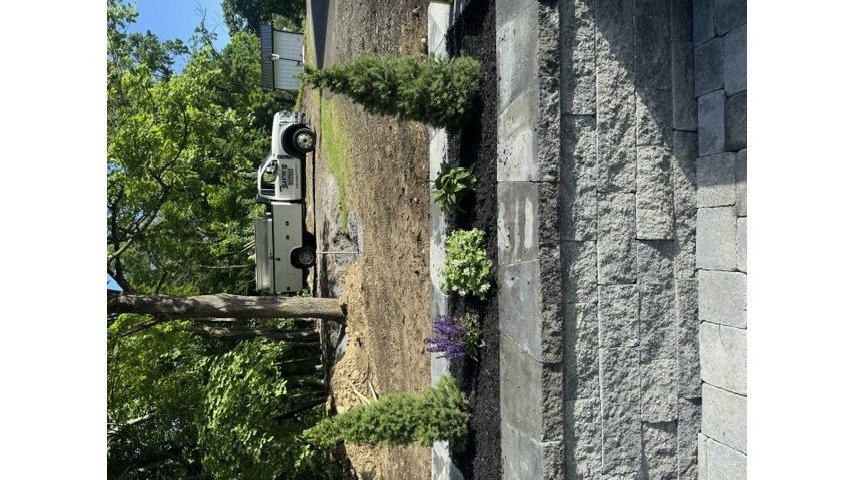
Small ornamental trees for front yards solve the space problem that large shade trees create. They fit between the walkway and the foundation, work as accents beside a patio, and stay in scale with single-story homes.
Columnar and upright forms suit narrow beds. Weeping forms work as focal points where you want the eye to stop. Multi-stem varieties give a shrub-like mass with tree-like height, which is useful for screening without a hedge.
For front-yard beds, we look for trees with a mature spread that leaves at least a comfortable walking path on both sides. Planting too close to the house is the most common mistake we address on existing landscapes, and it is almost always a mature-size problem, not a planting-day problem.
Ornamental Tree Care: Planting, Mulching, and Pruning
Ornamental tree care comes down to getting the first year right and then staying out of the tree's way.
Plant at the same depth the tree grew in the nursery, with the root flare visible. Dig the hole wider than deep. Backfill with native soil rather than amending heavily, so roots learn to grow into your actual ground.
Mulch in a ring two to three inches deep, pulled back a few inches from the trunk. Mulch against bark holds moisture and invites rot. Refresh it annually to hold soil moisture and moderate root-zone temperature.
Pruning is where homeowners do the most damage. Prune flowering trees right after bloom, and prune for structure in late winter while the tree is dormant.
- Water deeply through the first two growing seasons
- Keep mulch off the trunk
- Prune dead wood any time, structural pruning in dormancy
- Watch for pests and disease early, when treatment is easiest
Drawbacks and Maintenance Trade-Offs to Plan For
Ornamental trees are not maintenance-free, and pretending otherwise sets you up for disappointment. Fruit and seed drop can stain patios and walks. Some varieties sucker from the roots and need annual removal.
Roots are another consideration. Shallow-rooted ornamentals can lift pavers and interfere with foundations if planted too close. That's a placement decision, not a reason to skip trees entirely.
The honest trade-off is this: a tree rewards you in proportion to how well it's sited and cared for. Get the placement, planting, and early pruning right, and the maintenance load drops sharply after establishment.
That's where professional installation earns its keep. Done right the first time, with the soil, drainage, and spacing handled upfront, an ornamental planting becomes a low-effort asset rather than a chore. Dreams Set in Stone.
Adding ornamental trees is one of the highest-return improvements you can make to a yard, but only when the right tree goes in the right spot. You Need Santini's. Request a free quote and let's plan your planting.
Frequently Asked Questions
What are the benefits of adding ornamental trees to a landscape?
Ornamental trees deliver several benefits at once. They lift curb appeal and property value, provide shade that helps regulate temperature around a patio or entry, screen dust and noise, and support pollinators and native wildlife. Smaller ornamental varieties also fit tight front-yard beds where a large shade tree would overwhelm the space. For homeowners weighing a planting plan, the practical value is that ornamental trees work at a smaller scale, so you can place several without crowding a walkway or blocking windows.
Which ornamental trees add the most visual interest to a yard?
The strongest choices give you more than one season of interest. Flowering dogwood offers spring blooms and fall color, Japanese maple carries distinctive form and foliage into autumn, and serviceberry adds spring flowers plus berries that draw birds. Crabapple and redbud are other reliable picks for color. The best ornamental trees for landscaping are the ones matched to your light, soil, and space, so check sun exposure and mature size before you plant rather than choosing on flower color alone.
Can ornamental trees provide shade or privacy?
Yes, within limits. A single small ornamental tree casts a modest shade area, enough to soften a patio edge or shade a bench, but it will not cool a whole yard the way a large shade tree does. For privacy, a row of upright ornamental trees planted along a property line works better than one specimen. Plan spacing around each tree's mature spread, and remember that shade and privacy both build over several growing seasons rather than in the first year.
How should ornamental trees be cared for after planting?
Ornamental tree care after planting comes down to water, mulch, and restraint. Water deeply and less often so roots grow downward, keep a mulch ring a few inches back from the trunk, and skip heavy fertilizer in the first year. Prune only dead or crossing branches early on, then shift to structural pruning once the tree establishes. Watch for disease and pest pressure in spring. A professional planting plan that accounts for soil and drainage upfront prevents most of the problems that show up later.