 How-to
How to Write a Landscaping Project Contract That Protects Both Sides
Quick Summary
A landscaping project contract should name both parties and the property, define the scope of work in specific terms, state a working-day schedule with a weather and delay clause, and set payment terms tied to milestones. It should also cover change orders, warranties, insurance, and closeout. Written clearly, it protects both the homeowner and the contractor.
- Name both parties and the service property with full legal names and current contact details.
- Describe the scope in specific materials, quantities, and finish standards, and list exclusions.
- State the schedule in working days and include a weather and delay clause with written notice.
- Tie payments to project milestones and address unforeseen conditions before extra work begins.
- Require all changes in a signed change order, and tie final payment to a defined closeout.
Table of Contents
- Why a Written Landscaping Project Contract Matters
- Parties, Property Details, and Contact Information
- Writing a Clear Landscaping Scope of Work
- Schedule, Weather Delays, and Project Closeout
- Payment Terms, Deposits, and Project Cost
- Documenting Changes With a Landscaping Project Change Order
- Reviewing a Landscaping Contract Template and Example Before You Sign
- Booking Your Project With Santini's Landscape
- Frequently Asked Questions
How to Write a Landscaping Project Contract That Protects Both Sides
Last Updated: November 7, 2026
Why a Written Landscaping Project Contract Matters
A handshake and a rough estimate are how most landscaping disputes begin. A written landscaping project contract spells out what will be built, when, and for how much, so both the homeowner and the contractor know exactly what they agreed to. A solid contract is where clear expectations and finished work start.
A landscaping project contract is a written agreement that defines the parties, the property, the scope of work, the schedule, the payment terms, and the process for handling changes. Without one, disagreements about plant selection, grading, cleanup, or payment tend to surface only after the work is underway.
Think of the contract as the blueprint for the relationship, not just the job. We recommend treating it as a working document that both parties read before the first shovel hits the ground. Dreams Set in Stone starts with a clear plan on paper.
Parties, Property Details, and Contact Information
Every contract should name the contractor and the client by their full legal names. For a business, include the legal entity name and the name of the person authorized to sign. Add current mailing addresses, phone numbers, and email addresses for both parties so notices can reach the right people.
The property section should describe the service address precisely, including the lot, any gate codes, and where the work is physically located. If the property is a rental, confirm that the owner has authorized the work. This prevents situations where a contractor is paid by a tenant and then faces a dispute with the owner.
List any permits or approvals the project requires and state who is responsible for obtaining them. Local rules on grading, retaining walls, and tree removal vary, so the contract should assign that responsibility in writing rather than leaving it assumed.
Writing a Clear Landscaping Scope of Work
The scope of work is the most important section of the contract. It describes exactly what the contractor will do, and just as important, what is excluded. Vague language such as "install landscaping" invites disputes. Specific language such as "install 120 square feet of 24-inch bluestone pavers on a compacted gravel base, with polymeric sand joints" leaves little room for interpretation.
Break the scope into clear components: site preparation, excavation and grading, hardscape installation, planting, irrigation, and cleanup. For each component, specify materials, quantities, and finish standards. Note what the client is responsible for, such as clearing personal items from the work area or providing water access.
Plant establishment should be addressed directly. State the plant sizes, the planting method, and whether the contractor will water and maintain them for a defined period. Warranty terms for plants and hardscape should be written out, including what conditions void the warranty, such as lack of watering or damage from other trades.
Use a numbered or itemized list in the scope so both parties can check off completed work at closeout. A common mistake is putting scope details only in a proposal and not in the signed contract, so make sure the final scope is attached to or included in the agreement.
Schedule, Weather Delays, and Project Closeout
The contract should state an anticipated start date, an estimated completion date, and the total project duration in working days rather than calendar days. Working-day language matters in landscaping because rain, frozen ground, and extreme heat can shut a site down for days at a time. A schedule built on calendar days almost always creates friction when the weather turns. Review practical ways to keep a project on time to reduce delay disputes.
Include a weather and delay clause that does three things. First, it defines what counts as a delay: measurable precipitation, temperatures below the manufacturer's recommended installation range for pavers or concrete, saturated soils that prevent grading, wind that makes planting or spraying unsafe, and supply shortages from a named vendor. Second, it states the remedy: the completion date extends automatically by the number of lost working days, with no penalty to either party. Third, it names the communication method: the contractor notifies the client in writing within one business day of a weather stoppage and provides a revised schedule.
Force majeure language covers events outside either party's control, such as severe storms, extended drought restrictions that halt irrigation work, or supply disruptions. Define what happens when these events occur, whether the completion date extends automatically, and how the parties will communicate about the delay. Keep the force majeure clause separate from the ordinary weather clause so a routine rain day does not trigger the heavier legal machinery.
Closeout should be a defined step, not a vague promise. Specify the final walkthrough date, the acceptance criteria, the process for noting punch-list items, and the date by which those items will be corrected. Acceptance is clearer when the contract says the work is complete once all scope items are installed, cleanup is finished, and the client has signed off on the walkthrough. A common pattern is a written punch list signed by both parties, with a stated correction window and a final payment released only after the punch list is cleared.
Watch out: if the contract lets the client withhold final payment indefinitely over minor cosmetic items, the contractor has no leverage to close the job. Tie final payment to substantial completion, with punch-list items handled as a separate, time-limited obligation.
Document the closeout with photos of the finished work, a copy of any warranties, and the signed acceptance form. Dreams Set in Stone means the job is not finished until the paperwork matches the work.
Payment Terms, Deposits, and Project Cost
Payment terms should state the total project cost, the deposit amount, and a payment schedule tied to project milestones rather than calendar dates. A common structure is a deposit to schedule the project, progress payments at defined stages, and a final payment at closeout. Pricing depends on quantity, dates, and delivery, so the contract should reference the signed estimate rather than a general figure.
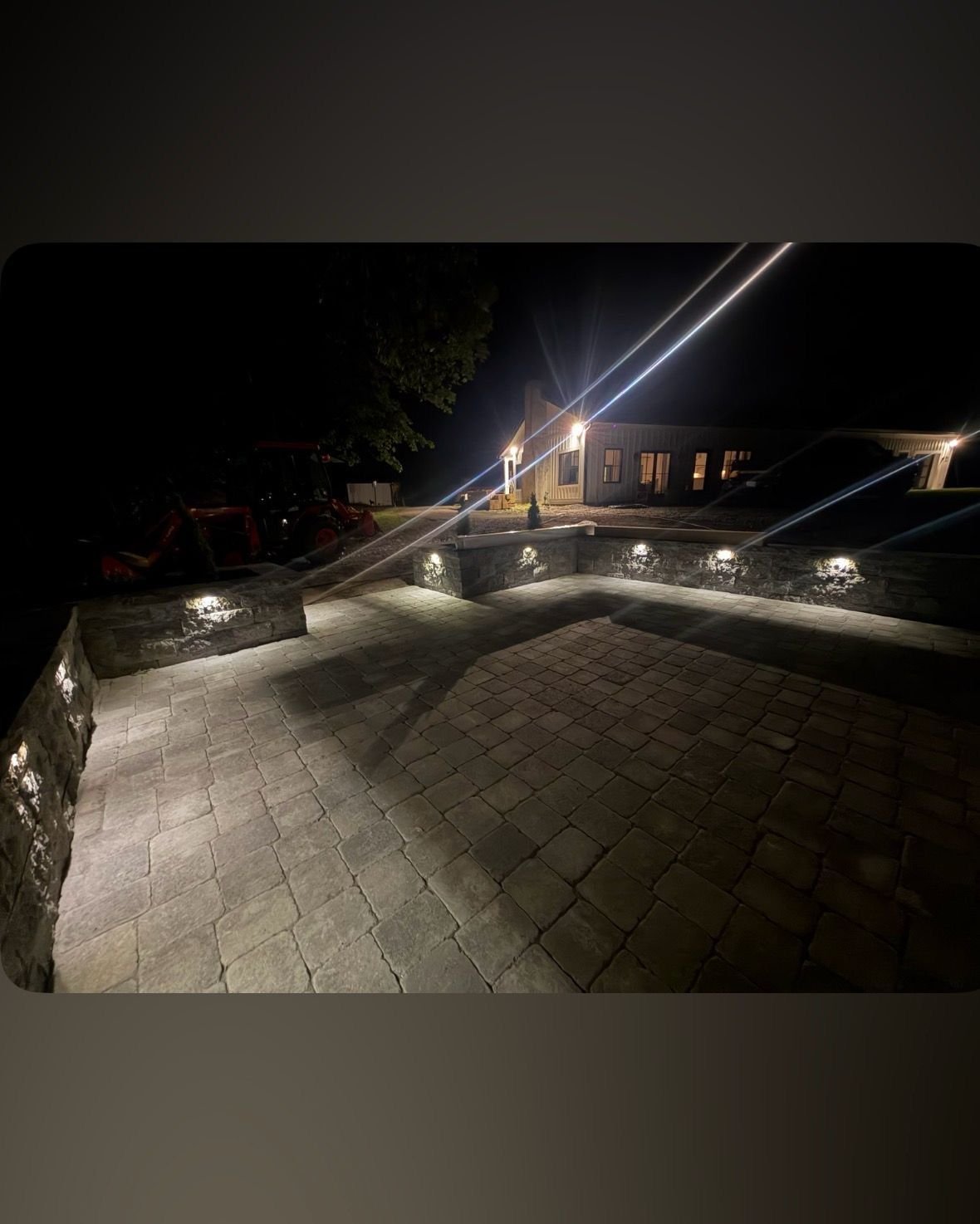
List the accepted payment methods, the due date for each payment, and any late-payment terms. Also address what happens if the project is canceled, including how much of the deposit is refundable and what has already been spent on materials.
Hidden costs cause more disputes than almost anything else. Soil problems, buried debris, and drainage issues can change the cost of excavation. Learn which hidden costs to write into the scope before setting the contract price. Write into the contract how unforeseen conditions will be priced and approved before extra work begins. For current pricing or a detailed estimate tailored to your property, request a free quote from Santini's Landscape.
The article lays out the cost and payment elements a landscaping contract should spell out, and where hidden costs tend to come from.
| Contract element | What it covers | Why it matters |
|---|---|---|
| Total project cost | Tied to the signed estimate | Avoids a vague figure |
| Deposit | Schedules the project | Sets cancellation refund terms |
| Progress payments | Defined project milestones | Ties payment to work done |
| Final payment | Released at closeout | Pairs with punch-list completion |
| Unforeseen conditions | Soil, debris, drainage | Priced and approved before extra work |
Documenting Changes With a Landscaping Project Change Order
Change orders are the mechanism for altering the agreed scope. A change order should describe the requested change, its effect on cost and schedule, and the signatures of both parties. No additional work should start until the change order is signed.
Include a clause stating that all changes must be made in writing. Verbal changes made on site are the most common source of disagreements over final billing. A short, clear change order form protects both the homeowner, who knows exactly what they are paying for, and the contractor, who has a record of approved work.
Reviewing a Landscaping Contract Template and Example Before You Sign
A landscaping contract template gives you a starting structure, but it should always be adapted to the specific project. Check that the template includes every section covered above: parties, property, scope of work, schedule, payment terms, change orders, warranty, insurance, and closeout. For background on how a land clearing contractor is vetted, review that guide before defining the contractor and property. Then check the sections most templates get wrong.
Permits, utility locating, and code compliance are the first gap. The contract should state who obtains permits for grading, retaining walls, decks, and tree removal, and who pays any permit fees. It should also state who arranges utility marking before excavation.
Insurance and risk allocation are the second gap. Ask whether the contractor carries general liability insurance and workers' compensation coverage, and require a certificate of insurance naming the client as an additional insured for the project. The contract should address property damage, including who is responsible if utility lines, irrigation heads, existing structures, or neighboring fences are damaged during excavation.
Plant warranties deserve their own paragraph. State the survival period, the watering duties the client must perform, the conditions that void the warranty (lack of water, chemical damage, animal damage, damage from other trades), and the remedy, whether replacement, credit, or refund. A warranty without a stated watering schedule is hard to enforce in either direction.
When reviewing a sample landscaping contract, look for vague language, missing signatures, undefined deadlines, and missing warranty or cancellation terms. Have the contract reviewed by a qualified attorney if the project is large or involves significant risk. Requirements can vary by location, so confirm local rules before finalizing any agreement.
Watch out: a template that omits the utility-locating and insurance clauses can look complete and still leave both parties exposed. Read those two sections first, not last. You Need Santini's to build it right, and the contract should reflect the same standard.
Booking Your Project With Santini's Landscape
A well-written contract is only as good as the team carrying it out. Santini's Landscape has been delivering landscaping, hardscaping, and excavation work across the Hudson Valley since 2004, and we focus on completing one project before taking on the next. Clients have described the team as on time, friendly, and prompt in answering questions, and as careful about their budget while delivering the result they wanted.
If you are planning a patio, retaining wall, drainage solution, or new landscape, reach out to Santini's Landscape and we will walk you through the scope, schedule, and payment terms before anything is signed. Dreams Set in Stone, and You Need Santini's to get it right.
Frequently Asked Questions
What should a landscaping contract include?
A solid landscaping contract names both parties with full contact details, describes the property and service address, and lays out the scope of work in plain terms. It should also state the project start and completion dates, the payment schedule and accepted payment methods, how change orders are handled, and what happens if work is canceled. Many homeowners also ask for clauses covering materials, plant selections, cleanup, and warranty terms, since these are the points most often disputed later. Ask for a signed, dated copy before any work begins.
Should a landscaping contract include a detailed scope of work?
Yes. A detailed landscaping scope of work is the single most useful part of the contract because it defines exactly what you are buying. List each area of work, the materials and plants to be used, site preparation steps, and the final cleanup. Vague language such as 'landscape the backyard' invites disagreement over what was included. A specific scope also makes it easier to spot when a change order is needed.
How should changes to landscaping work be documented?
Changes should be recorded in a written landscaping project change order, not agreed to verbally. The change order should describe the modification, the reason for it, the revised cost or credit, and any effect on the schedule. Both parties should sign it before the new work begins. This protects the homeowner from surprise charges and protects the contractor from unpaid extra work.