 how-to
French Drain Installation Time: How Long It Really Takes
Last Updated: November 4, 2026
Quick Summary
A residential french drain installation takes anywhere from a single day on a short, simple run to several calendar days on longer or more complex systems. Actual time depends on trench length and depth, soil type, site access, and weather, and utility marking can add delays before digging begins.
- Calendar days often exceed labor hours because of utility marking, drying time, and equipment availability.
- In easy loam, a two-person crew can trench and lay pipe on a 50-foot run in one day.
- Heavy clay can stretch a 50-foot run to a day and a half because trench walls need shoring.
- Request utility marking the day you book, since marks can take several business days to arrive.
- Checking grade as you go prevents costly corrections before backfill and restoration.
Table of Contents
- How Long a French Drain Installation Takes on Average
- Factors That Change the Timeline
- Step-by-Step Installation Process and Time Required
- French Drain Depth Requirements and Trench Excavation
- Site Preparation for Drainage Systems and Grading
- Common French Drain Installation Mistakes That Add Time
- Booking Your Drainage Project With Santini's
- Frequently Asked Questions
How Long a French Drain Installation Takes on Average
The time needed to install a residential French drain depends on the length of the run, soil conditions, and site access, and longer or more complex systems take more time than short, simple ones.
We do this work for homeowners across the Hudson Valley, and the calendar days are only part of the story. A French drain is a gravity system built on a slope, so the crew has to dig to the right grade, lay perforated pipe, wrap it in filter fabric, and fill the trench with drainage aggregate. Each step depends on the one before it. Rush the grade and the water sits instead of flowing.
Planning for a clean, well-built system means expecting the timeline to move. Weather, soil, and the condition of the yard all shape how long the job takes.
Factors That Change the Timeline
No two yards drain the same way, and no two installs run on the same clock. The biggest swings in schedule come from a few predictable factors, and the useful way to plan around them is to separate man-hours from calendar days. A crew might put 16 labor hours into a job that still occupies three calendar days because of drying time, utility marking, or equipment availability.
- Trench length and depth: Every extra foot of trench adds digging and backfill time. A 50-foot run at 18 inches deep is a different job than a 120-foot run at 30 inches.
- Number of outlets: Each discharge point needs its own outlet run, and each one adds a tie-in and a daylight check.
- Site access: Tight side yards and fenced backyards slow equipment down. A gate narrower than a mini excavator means hand digging or a smaller machine.
- Existing hardscape: Patios, walkways, and retaining walls must be cut around or removed, and restoration adds a separate pass.
- Weather: Rain turns trenches into mud and stops work for hours or days. In spring and fall, a single wet week can push a two-day job into the next week.
Soil Type and Its Effect on Labor
Soil is often the largest hidden variable, and it is the one most guides skip. Clay holds water and is heavy to dig, so crews move more slowly and spend more time on compaction. Sandy soil digs fast but can collapse if the trench walls aren't supported.
A practical way to think about it: in easy loam, a two-person crew can trench and lay pipe on a 50-foot run in a single day. In heavy clay, the same run may take a day and a half because the walls need shoring and the spoil is harder to move.
Before we quote a job, we look at how the soil drains and how hard it will be to excavate. That is how we build a realistic schedule rather than a best-case one. Dreams Set in Stone means the timeline we give you is the one we expect to keep.
Permitting, Utility Marking and Equipment Rental Logistics
The work itself is rarely the only delay, and this is where calendar days pull away from man-hours. Before any digging starts, utility lines need to be located and marked. Utility marking is typically handled through a one-call system, commonly reached by dialing 811, and it must be requested before excavation begins (811 Before You Dig). Because marking can take several business days to arrive, a project can sit idle even when the crew is ready.
Some towns also require permits for drainage work that changes grading or discharge points. Check with your local building department early, since permit review can add time to the schedule. Equipment rental adds its own scheduling, since mini excavators and compact track loaders are often booked a few days ahead, especially in spring and fall.
Watch out: digging before the utility marks are painted is the single fastest way to turn a two-day job into a multi-week repair and inspection process.
Man-Hours vs. Calendar Days
When you plan a French drain, ask two separate questions. How many labor hours will the crew put in, and how many calendar days will the project occupy?
The gap between the two numbers is where most homeowner schedules break. You Need Santini's when the calendar, not just the labor, has to be planned around a real date.
Step-by-Step Installation Process and Time Required
A solid French drain follows a clear sequence, and each stage has a rough time budget that helps you see where the days go.
- Mark utilities and confirm the layout. Utility marking should be requested before any equipment arrives, and layout and staking are completed on site before digging.
- Dig the trench to grade. Most residential trenches run 12 to 24 inches deep, sloped toward the outlet. Soil type strongly affects excavation speed, with clay and rock slowing the work considerably.
- Line the trench with filter fabric. This keeps soil out of the aggregate. Overlap the fabric edges so the stone bed is fully wrapped.
- Add a base of drainage aggregate. Place stone so the pipe sits on a firm, level bed. A base of drainage aggregate is placed so the pipe sits on a firm, level bed.
- Lay the perforated pipe. Holes face down so water enters from below and flows out. Check grade with a level and string line as you go; Checking grade as you go helps avoid corrections later. Our landscaping team can also handle the surrounding grading and restoration so the yard finishes cleanly.
- Cover the pipe with more aggregate and fold the fabric over the top. This completes the stone work around the pipe.
- Backfill and restore the surface. Compact the soil and replace sod, mulch, or pavers. Backfill, compaction, and surface restoration are completed once the grade is verified.
Dig and lay the pipe in one day, and backfill and restore the next. That split is common on larger jobs, and it is why a job that looks like 16 man-hours can still occupy two calendar days.
Tools and Materials You Will Need
- Mini excavator or trenching machine, or shovels for small runs
- Perforated drainage pipe, typically 4-inch diameter
- Non-woven geotextile filter fabric
- Clean drainage aggregate, usually 3/4-inch stone
- Level, string line, and stakes to hold grade
- Compactor or plate tamper for backfill
- Sod, topsoil, or mulch for restoration
Where the Time Actually Goes
Excavation, pipe and stone work, and surface restoration each take a share of the project, and unexpected conditions such as rock or buried utilities can add time to any stage.
Watch out: skipping the grade check before backfill is the most common reason a job runs long, because a trench that does not drain has to be reopened and re-laid.
Dreams Set in Stone is how we sequence every install, and You Need Santini's when the schedule has to hold from the first stake to the last patch of sod.
Each stage of a residential French drain has a rough time budget, so the table below shows where the calendar days actually go.
| Step | What happens | Time or frequency |
|---|---|---|
| Mark utilities and confirm layout | Request utility marking before equipment arrives | Schedule the call on booking day |
| Dig trench to grade | Excavate, sloped toward outlet | Typically 12-24 inches deep |
| Line with filter fabric | Keep soil out of aggregate | Overlap edges fully |
| Add drainage aggregate base | Firm, level bed for pipe | Placed before pipe |
| Lay perforated pipe | Holes face down, check grade | Dig and lay in one day |
| Backfill and restore surface | Compact soil, replace sod or pavers | Often the next day |
French Drain Depth Requirements and Trench Excavation
Depth is what makes a French drain work. The trench has to sit below the water table or the soil that is causing the problem, and it has to slope steadily toward the outlet. A consistent downhill slope toward the outlet is essential for the system to drain properly. Too flat and water sits in the pipe. Too steep and the trench can erode.
Trench depth also depends on frost depth in your area and on where the outlet sits. Digging deeper takes longer, so the depth you choose directly affects the schedule.
Site Preparation for Drainage Systems and Grading
Good site prep saves time later. Before digging, mark the path of the drain, identify the outlet, and clear any plantings or edging in the way. Look at how water moves across the yard during a heavy rain. The drain should collect water where it pools and carry it to a place where it can safely drain away from the house.
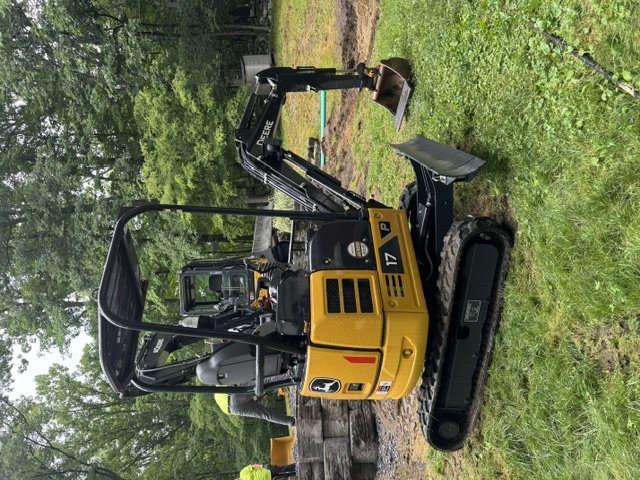
Grading is the other half of the job. Even a perfect pipe can't fix a yard that slopes the wrong way. Plan the grade before the trench goes in so the surface drains toward the system and away from the foundation.
Common French Drain Installation Mistakes That Add Time
Most schedule overruns come from a few avoidable errors.
- Wrong slope: A trench that doesn't drain has to be dug out and redone.
- Skipping filter fabric: Soil migrates into the stone and clogs the pipe, which means digging it up later.
- Pipe holes facing up: Water can't enter, so the system fails.
- Missing utility marks: Hitting a line stops everything until it's repaired.
- Rushing backfill: Poorly compacted soil settles and leaves dips in the lawn.
A careful crew catches these early. That keeps the job on schedule and the drain working for years.
Booking Your Drainage Project With Santini's
Every French drain we build is an install for a homeowner who needs the water moved, and we plan each job around that goal. Dreams Set in Stone is how we approach every yard, and You Need Santini's when the drainage has to hold up for the long haul.
Pricing depends on trench length, soil conditions, access, and restoration needs, so the right way to get numbers is a site visit. Request a Free Quote from Santini's Landscape and we will walk the yard with you, mark the layout, and give you a realistic timeline before any digging begins.
Frequently Asked Questions
How long does it take to install French drains?
Installation time depends on the length of the run, soil conditions, and site access, and calendar time can differ from crew time because of scheduling and weather. Longer runs, rocky or compacted soil, and projects that need utility marking or permits can stretch the timeline. Calendar time can be longer than crew time because of scheduling, inspections and weather. Ask any contractor for a written schedule that separates crew days from total project days so you can plan around it.
Does a French drain start working immediately after installation?
A French drain starts moving water as soon as the trench is backfilled and the outlet is connected, but it works best after the surrounding soil has settled. Heavy rain shortly after installation can reveal low spots or outlet problems that need correction. Most homeowners see noticeable improvement in the first wet season. Proper site grading and clean drainage aggregate are what keep the system performing over the long term.
How deep does a French drain need to be buried?
Pipe depth is set by the slope of the yard and the level of the water problem. The trench must maintain a consistent downhill grade toward the discharge point. Excavation depth affects both labor time and the amount of gravel and fabric needed. Your installer should confirm depth and grade on site before any pipe is laid.
What factors influence the duration of a French drain installation?
The biggest factors are total trench length, soil type, access for equipment, depth, the number of outlets, and whether the crew must work around patios, utilities or established landscaping. Clay and rocky soil slow digging, while sandy soil moves faster but may need more careful backfill. Tight access often means hand digging, which adds significant man-hours. A clear site survey lets a contractor estimate duration more accurately.